



When you’re out there, hiking by yourself day after day, your brain starts to wander, like it’s got a mind of its own. It ventures off into corners you didn’t even know existed. Thoughts just come at you, involuntarily.
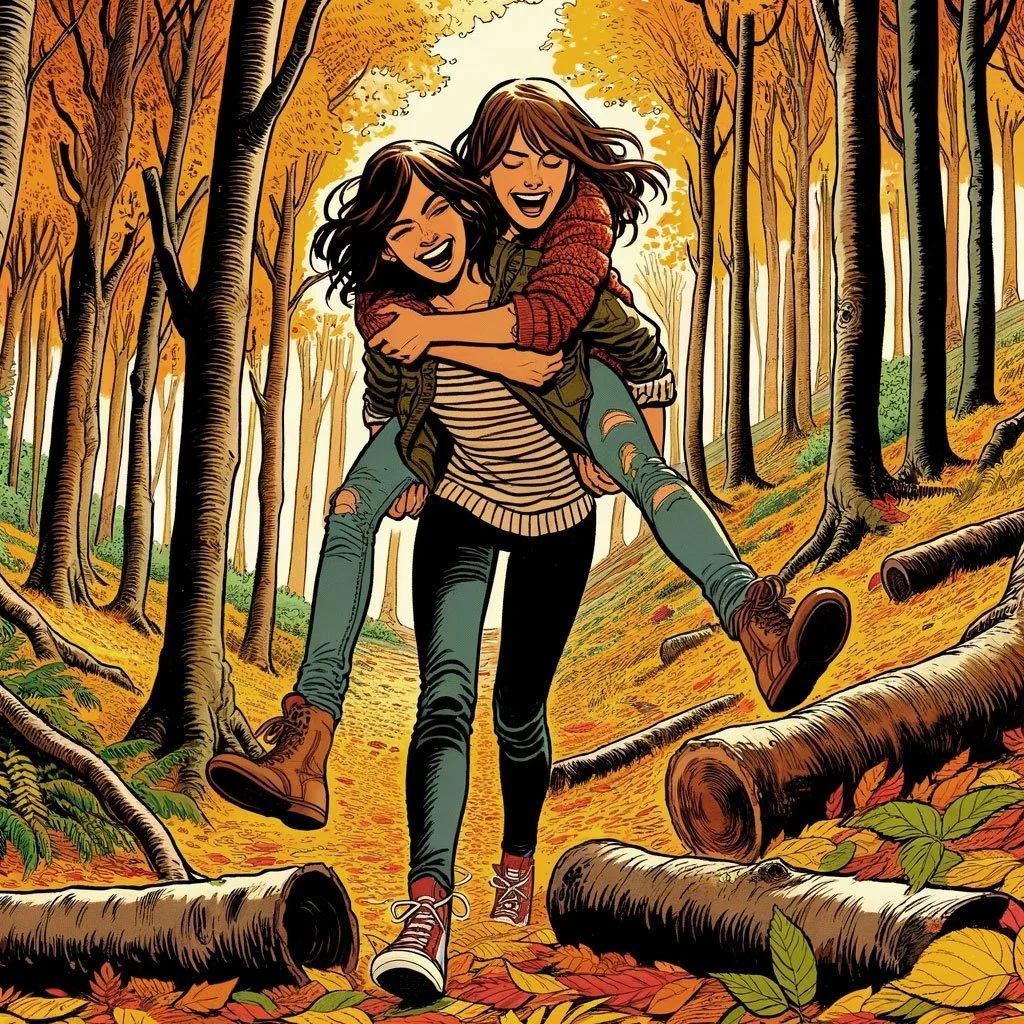
There I am, crunching through autumn leaves, when out of the blue, a thought just bubbles up from nowhere.
I wonder how salmon would feel knowing we named a color after them, but it was their color with their skin off?
Now and then, I purposely focus on a thought, just to distract myself from the exhaustion long enough to get a few more miles in.
Once I tried to see how many eighties TV theme songs I could sing from memory, which turned out to be a respectable seven, but the songs could get stuck in my head for hours afterwards.
Some days, my distraction was storytelling, I’d occupy my mind fleshing out plots and characters. Like one day, after seeing a bird flying overhead, I started to craft a tale about that guy in the old Superman intro, who shouted, “Look up in the sky; it’s a bird!”
I’d trudge up a steep incline, wondering, what sort of businessman gets this excited about a bird? How would bystanders react in the real world?
Maybe he’d never heard of Superman, and started to shout, “Look up in the sky; it’s a flying man!” but halfway through realized how crazy this sounded and called an audible.
A nervous mother pulls her child closer and he wonders what his life has become.
He feels a modicum of relief when someone else yells, “No, it’s a plane!” and takes off some of the heat. But then, “No, it’s Superman!” gets thrown out, and he’s kicking himself for not having the confidence to stick to his guns. Story of his life, really—confidence was never his strong suit, probably why he's dining solo every night at the age of forty, and will most likely die alone.
Collapsing on the curb, never feeling lower, a shadow appears by his side. He looks up at the face of the most beautiful woman he’s ever seen, an avid birdwatcher moved by his curious passion for birds. Thinking she’s found her soul mate, offers him a hand.
“Or maybe he’s just part of a social experiment,” I said to Lightfoot, “to see how people react to someone pointing out the mundane with extreme enthusiasm.”
I asked him if he’d try this out for me the next time we were in town for research, but he didn’t seem impressed with this story idea.
Near the end of another marathon day, having trekked just over 26 miles, I rushed to catch up to him and pitch another idea.
“Okay, so. It’s the last day on earth,” I said out of breath.
“And why’s that?” he asked.
“I don’t know, an asteroid or something. The point is that everyone knows they only have one more day to live. Now, there’s a prostitute who feels compelled to spend her last day seeking God and forgiveness. Meanwhile, a celibate priest, feeling deep regret having never experienced a loving, intimate relationship with a woman, decides to spend his last day trying to get laid. Their paths cross. Their eyes meet. They both think the other is the answer to their prayers.”
“Actually, that one’s not bad,” he said.
“Yeah, I think I’m on to something there,” I said. “But I’m stuck on whether it should be a comedy or a tragedy.”
Before embarking on this long hike, silence and the internal voice that filled its void were not always so companionable. My inner voice was a relentless critic, often spiraling into regret about the past or gloom about the future.
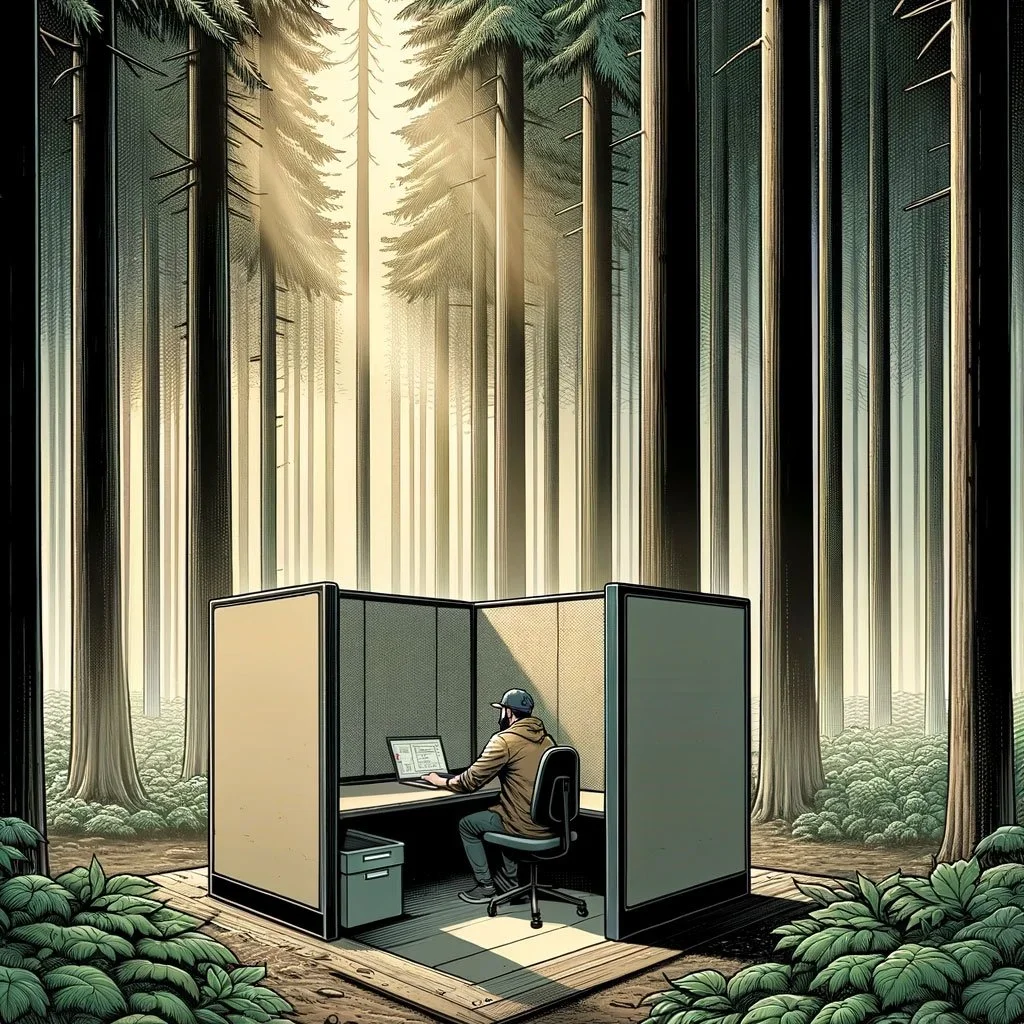
At night, my mind would inevitably drift to thoughts about death and chide me for wasting so much of my precious conscious blip, in this vast eternity sandwich, sitting in a cubicle.
I’d be lying if I said my mind was always at peace while hiking, but it did become a better place to live. I still had my worries, but when I talked to the day-hikers and townsfolk, I realized their preoccupations felt increasingly alien.
Near a jagged rock formation called Dragon’s Tooth, I shed my pack then brushed away the loose dirt on a patch of bedrock to sit down. The view of the expansive Virginia landscape had started to turn orange with a few bright scarlet shrubs throughout.
A day hiker walking past told me to set my watch back an hour. “It’s daylight savings time today,” he said.
I nodded and thanked him for the reminder, which seemed like valuable information before remembering I didn’t have a watch. I couldn’t have told the man on most days, with absolute certainty, the day of the week, let alone the hour.
For the most part, time and schedules just stopped mattering. With each sunrise, when the melodious chirping of birds filled the air, I woke up, gathered my belongings, and set off down the trail. I’d hike until feeling hunger pangs, at which point, I’d stop to eat. If the view was nice, I’d sit longer. Then I’d resume until I got tired, or found a camping spot I just couldn’t pass up.
My shadow’s length became my clock. When I needed more precision, I would hold my hand up sideways at arm’s length, measuring the distance between the sun and the horizon. Each finger width roughly equaled fifteen minutes of daylight.
I met another day hiker near McAfee Knob. After giving me a quick once-over, he asked, “A.T.?”
I nodded and he handed me a clutch of Halloween fun-size Candy Bars.
“Five people have died on the trail this year. Did you know that?” he said, skipping the small talk and jumping right into the deep end.
Once upon a time, taking candy from a stranger in the woods—especially one fixated on trail deaths—might’ve given me pause. Not anymore, apparently. I popped one in my mouth, and confirmed I hadn’t heard about the deaths with a mumbled, “Hmm-mm.”
“Yeah, one had a heart attack. Another just never woke up—could’ve been an aneurysm, or uh, what do you call it…” His eyes dropped, as if the right word was somewhere on the ground, then settled on “—embolism.”
He seemed to think this grim news was crucial for me to know. But even with a mouth full of stranger candy, thoughts of dying on the trail hadn’t really entered my mind. Even now, I was musing over a recent conversation with Lightfoot about the misnomer “Fun-size.” As though fun in a Snickers wasn’t relative to its net weight.
Although the news of deaths on the trail hadn’t reached me, it didn’t shock me either. The Appalachian Trail covers more square miles than most cities and hosts four million hikers annually. It would be as remarkable as The Fountain of Youth if nobody ever died on it.
“And a guy in Maine slipped off the trail, “ he continued. “Yeah, he died. Oh, and almost forgot, one guy had a stroke when he was just twenty miles from finishing a thru-hike, which is just tragic. Now the one everyone’s talking about is this hiker from Indiana—they found him strangled.”
Just three months before, near the trail in Mount Pleasant National Scenic Area, two hikers made the chilling discovery. Covered in forest debris was the body of a fellow Hoosier, in the middle of his big dream hike—linking up all the Civil War sites from Maryland to Georgia.
The police report just said “asphyxia by suffocation,” but the phrase is too clinical to capture the true horror of it happening to you.
I couldn’t imagine, but even trying was unsettling, yet somehow this didn’t make me feel less safe. This fearlessness had little to do with bravery, though. Cold, hard statistics gave me my courage. The odds of being murdered on the trail were no worse than the daily gamble of our morning commute. And nobody ever called me brave for driving to work.
It’s the rare events that grab headlines. Nobody’s clamoring to secure movie rights from the hiker who didn't have to cut off their own arm or who didn’t die in a bus in the Alaskan Wilderness. When murder on the AT becomes so common that they stop reporting it, then I’ll start worrying.
“Ever heard of Randall Lee Smith?" he asked.
“Well, given our topic, and the use of his middle name, I suspect he killed some people?”
“Yeah, back in the early eighties. He shot two AT hikers near Pearisburg."
Hmm, I thought, I’m just two days away from Pearisburg.
“Went to a shelter outside town. Shot one, then the other.” he said. “He served thirty years, got parole, and then about five years ago, he goes back up near that same spot outside Pearisburg. Shoots two fishermen then steals their pickup and leaves them to die, but they survived. Later he crashed the truck, and that’s how the police caught him again.”
I unwrapped another fun-size candy bar, the wrapper’s crinkle breaking the silence.
“So he found himself back behind bars,” he went on. “Never made it out again. He died in there. Between you and me, I think it was murder.”
Reports claimed Randall Lee Smith succumbed to his injuries from the truck accident four days later, but the candy man doubted this narrative, possibly influenced by one too many true crime stories.
He offered to take my photo on McAfee Knob. As the most photographed spot on the AT, I accepted the offer. After bidding each other farewell, I walked away, contemplating our conversation.
While we were deep in the woods of Maine, Thumper asked what I feared most.
“Speaking in public, probably, or dying,” I said. “Probably more the dying one than the speaking in public one.”
Thumper confessed that her biggest fear was alien abduction. A fear so strong that one night, she got outraged when I made an innocent reference to the movie E.T.
“Dammit, Cam!” she yelled, “Now I’m going to be thinking of aliens outside my tent all night!”
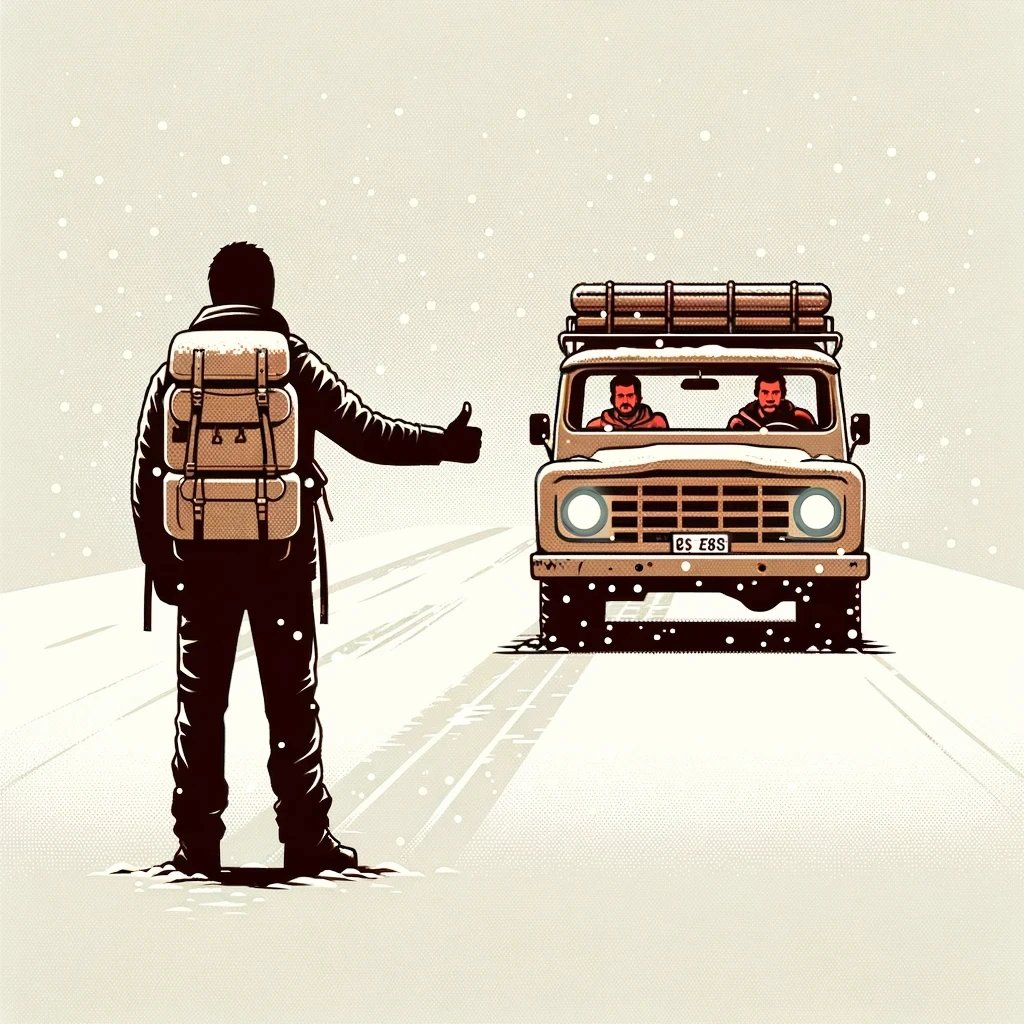
She didn’t talk to me again until morning. Yet, oddly, she’d jump into a stranger’s car for a lift to town without a second thought.
Fearing death is as rational as fears come, given it’s both horrifying, guaranteed, and sort of the point of fear in the first place. Before the hike, I thought about it a lot. It often crept into those quiet moments, especially when laying in bed at night, threatening to pull me into a spiral of despair. I’d lay awake at night thinking, why would it be any different than the unconscious eons before I was born?
Rather than face this fear, I brushed it aside, comforting myself with the knowledge that nobody really knows what happens, so there’s no reason to dwell on it.
I know I’m not alone. Thinking about death is nobody’s favorite pastime. Some claim their faith shields them from this fear, but I wonder. There’s the old adage, “There are no atheists in foxholes,” but spend enough time looking at faces in hospitals and funeral homes, and you’ll see—in the foxhole, we’re all agnostic.
Throughout my hike, death rarely crossed my mind, until it suddenly did. I can pinpoint the exact moment—it happened in a shelter near Pearisburg, Virginia.
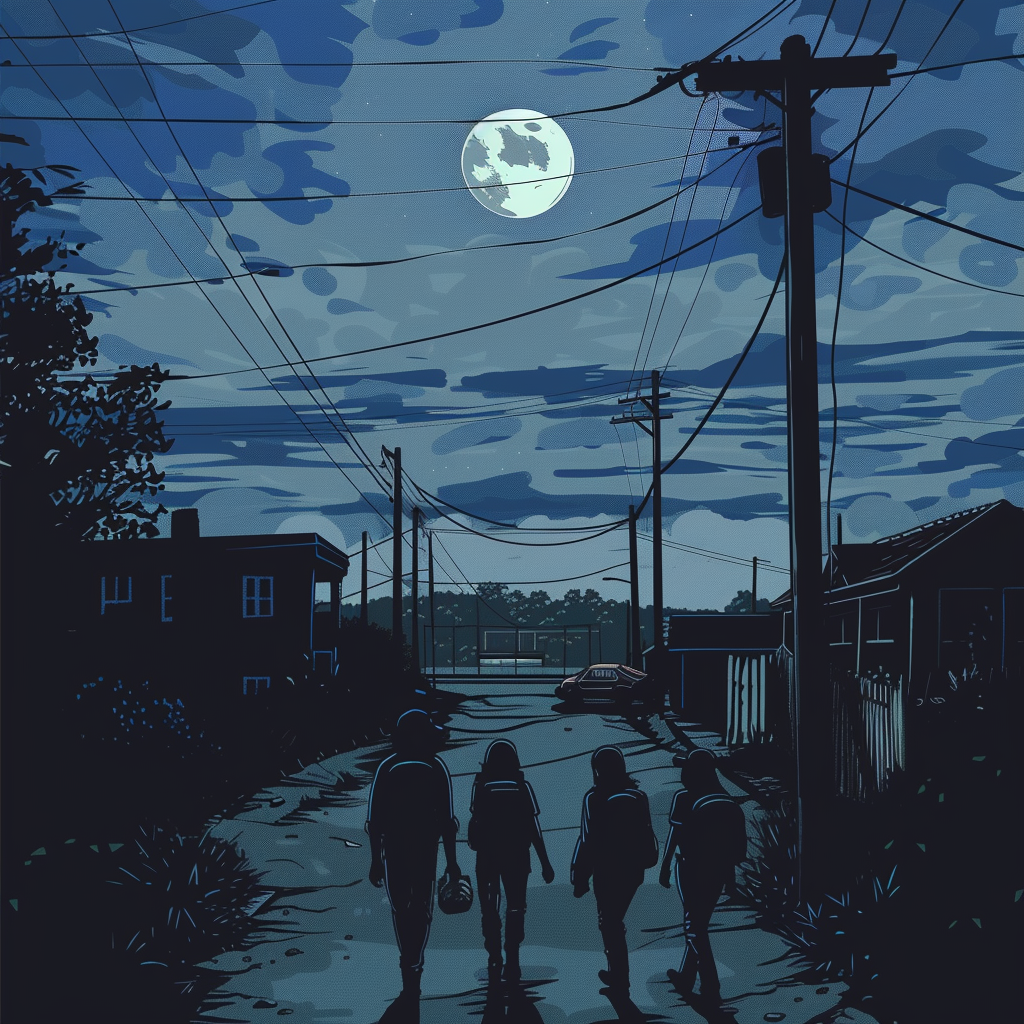
With shorter days, I hiked well past nightfall to reach my mileage goal. Finally, I came to a shelter sitting quietly in the moonlight. I dropped my pack and set a pot of water on my stove to boil. Too famished to wait, I shoved an entire honey bun in my mouth, then sat next to my stove with my legs hanging off the shelter’s edge.
The moonlight caught in the trees’ latticework, left more shadows than light. And the steady rush of the creek had this unsettling way of swallowing every other sound. It was the kind of quiet that made you paranoid a bear might be about to tap you on the shoulder.
After dinner, I did the usual routine—brushed my teeth with the stars as my bathroom light, hung my food bag out of critter reach, grabbed my book, and slid into my sleeping bag.
Although close to midnight, and after a exhausting twenty-mile day, I still resisted sleep to read my book. But it might as well have been written in ancient Greek. I re-read the same page over and over without comprehending any of it, so I finally called it quits and killed the light.
When settling in, my calm was shattered by a yellow glow creeping through the woods. It wasn’t the reflective eyes of wildlife, or friendly fireflies, but a man wearing a headlamp. The trail was on the opposite side, so he was making his own through the brush. The light got closer, and that’s when I saw it—a rifle in his hands.
Instantly, my body went from zero to panic. He could be the world’s friendliest hunter for all I knew, but try telling that to my lizard brain, which just injected me with a whirlwind of stress hormones. My brain went on high alert and did it’s thing, accelerating my breathing, increasing my heart rate, and pumping extra glucose into my muscles to prepare me for flight or fight. But there I was, a useless human burrito, neither fight nor flight was on the table.
If this was some lunatic who had been watching and waiting for me to slip into the restraints of my sleeping bag, all I could really do was roll back and forth like a carnival game duck with a target on its belly, hoping he had the aim of a stormtrooper and was low on ammo.
His headlamp’s glowing yellow eye, bore into me as he strode passed the shelter.
“Hello,” I managed to say—no reason to be uncivilized.
Without breaking his stride, he replied, “How you doin’?” in a deep Virginian accent with what seemed like forced bravado.
“Good… How you…” I trailed off, listening intently to the fading crunch of dry leaves under his feet. I held my breath until the noise melted into the sound of the creek.
The horror those people must have felt when staring down the barrel of Randall Lee Smith’s gun was beyond me, yet lying there in the dark, it suddenly seemed less abstract. My limbs felt limp, like they do after dodging a car crash.
Enough time had to pass before I dared to fall sleep, but it took a while to come down from the adrenaline high anyway. Awake in the dark, I pictured the rifle aiming at me—a blinding flash, a deafening bang, and then, well as to what came next, why should it be any different from the unconscious eons before I was born?
I prepared for the usual descent into despair that had filled so many of my sleepless nights, yet surprisingly, it never showed. Sleep came swiftly once the adrenaline faded.
The following day, this still occupied my mind. Not what happened, but why the thought of death didn’t bother me like it once had. I realized it wasn’t the concept of not existing that had bothered me, but all the experiences I might never have—Like never putting a pack over my shoulders to go on a very long hike. I’d think about how I had something so mind-bogglingly rare as life and I let it rot like an eggplant in a vegetable crisper, despite all intentions to use it.
Though I hadn’t shaken off the fear of death completely, the anxiety about living an unfulfilled life had vanished, and with it, the despair. I was doing what I loved, and I would continue to do what I loved for as long as I possibly could, and que sera sera.
In time, I came to know the stories of those who perished on the trail that season. “Model-T,” at 69, died quietly in his tent in Davenport Gap, 235 miles into his hike. Another, a firefighter, master gardener, and garden shop owner, fell to his death in Maine. It was said that he loved the earth, loved to camp out, and loved to sleep under the stars.
Then there was Buffalo Bobby, an Appalachian Trail legend. Nearly making it to Katahdin, he fell short by twenty miles on his third thru-hike in eight years—a remarkable effort acknowledged by all in the trail community. Tragically, a severe stroke in the 100-Mile Wilderness left him unresponsive, leading to his death at Millinocket Hospital. For Bobby, the trail was everything. A phrase he lived by was, “All men die; not all men live.”
It's not my Intention to downplay the sorrow surrounding these men’s deaths or their families’ grief. Yet, were the roles reversed, I think those men would agree that succumbing to a monotonous existence, leaving countless paths unexplored, would have been its own tragedy.
Life isn’t permanent. Its fleeting beauty shines against a backdrop of eternity. It’s so brief that if you condensed the entire lifespan of the universe into a timeline as long as the Appalachian Trail, a single human lifetime would measure to less than one inch. Too small to even stand on. And for all any of us know, when it’s over, it’s over for eternity—an unfathomable concept.
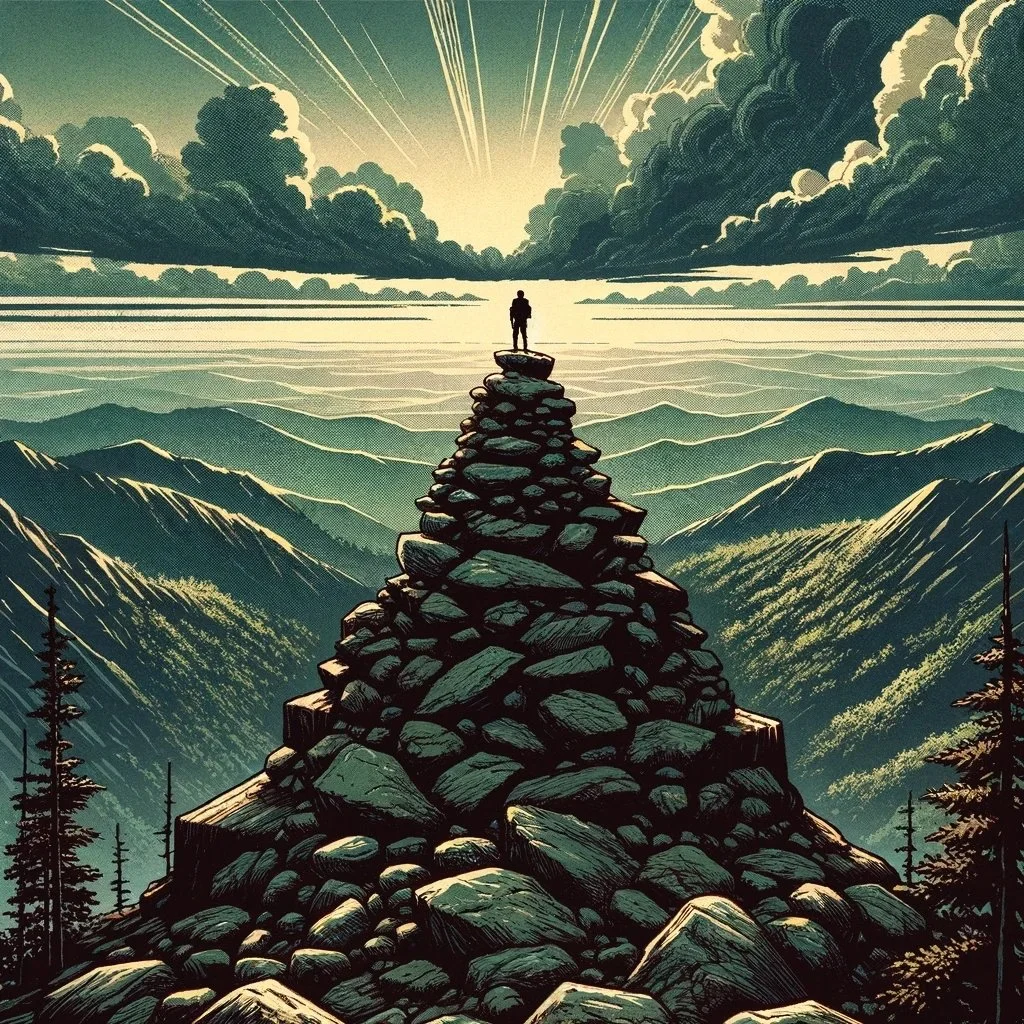
Imagine this: If you were to carry a single rock from Mount Katahdin to place on Springer Mountain, an old AT tradition, and you did so continuously until the entirety of one mountain stood on the other, you would still find yourself at the starting line of eternity. We get that little inch to experience as much as we can. What a tragedy it is to waste it with one continuous routine.
I acknowledge the bleakness of this perspective, but life’s rareness and brevity also happen to be why it has any meaning at all. I couldn't cope with my fear of death by convincing myself that there is an afterlife, but I didn’t have to. I just needed to live this life. Not forcing myself to deal with this reality, pushing it out of my mind, and telling myself it might not be true, only served to destroy the urgency of living now.
I stopped hiking, pulled out the journal tucked in my back pocket, and wrote a message to my family on the back side of the cove, figuring that if I died, someone in my family would surely read it.
“If I don’t make it back home,” I wrote. “I want you to know I died without any fear of death and with the knowledge that I had lived my life to the fullest, a life worthy of life itself.”