




Every hiker hitting the trail packs more than gear; they carry their story, a deeply personal script for why they swapped the daily grind for the great wide somewhere. Among them, are the fresh-faced kids, hungry for their first taste of real freedom. There are the retirees, with their clock-punching days behind them, eager to carve out some life for themselves. Then you’ve got your thrill-seekers, your soul-searchers, and the curious types, just itching to see what’s hidden around the next bend.
When you ask why they’re trading in their cushy beds for a patch of dirt under the stars, their answers run the gamut from “the stars aligned” to “my world imploded.”
The trail’s a magnet for all types—from those counting their last penny to those with cash to burn, from high school drop outs to PhDs, artists to engineers—all streaming in from every corner of the globe, merging like tributaries into one big, roving river.
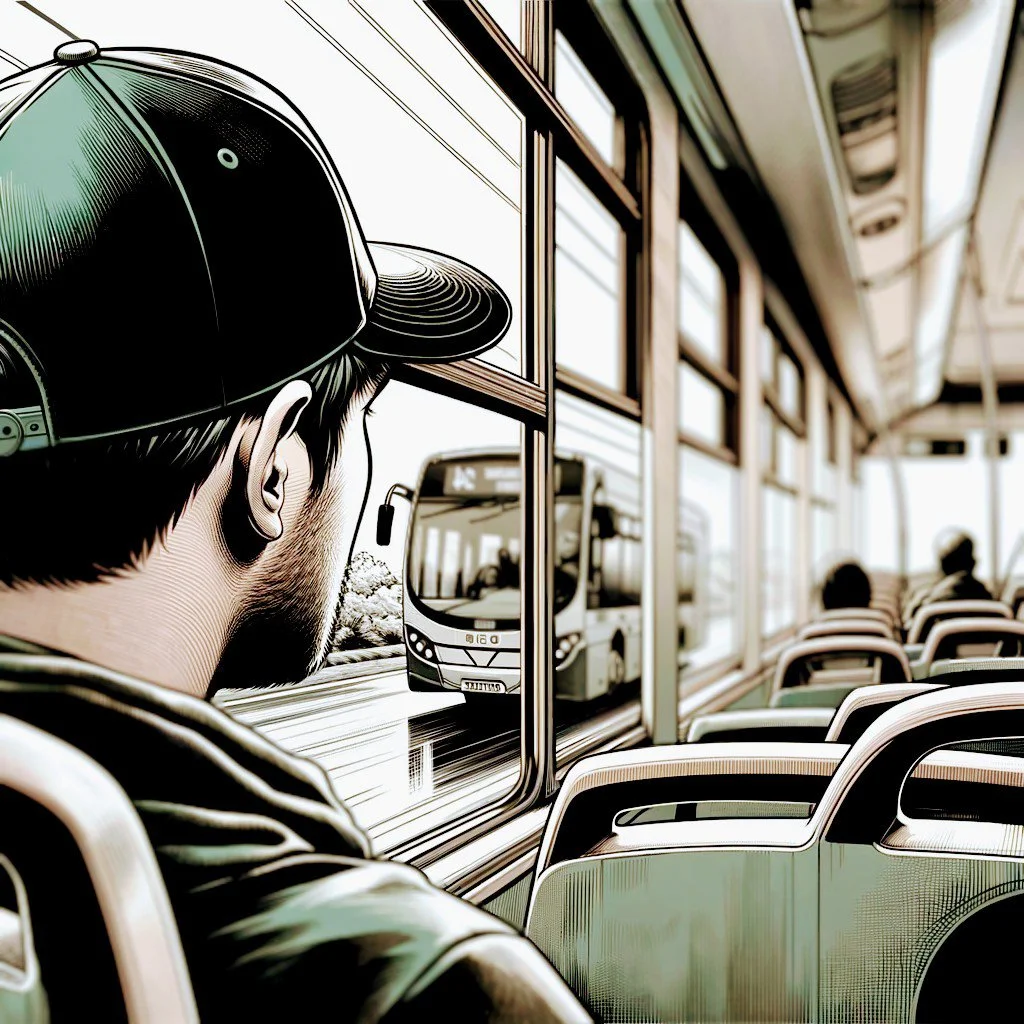
Every twist and turn of my life, the good and the bad, funneled me to this singular moment: sitting on a bus rumbling toward Bangor, with the northern terminus of the Appalachian Trail calling my name.
Sneaking peeks through the seat gap, I caught a sitcom playing on a kid’s laptop. The English dialogue with Mandarin subtitles brought back memories of my own failed attempts to brush up on my Spanish this way. It was a welcome distraction, though, from the symphony emanating from the bus restroom and the unsettling vacant-eyed stare from the man sitting behind me, who seemed to be one bad day away from strangling someone with an old guitar string.
Up ahead, two men were deep in some animated chat that faded into the background until “A.T.” cut through the noise. Suddenly, a guy with ginger hair and a khaki hat snagged my attention. His words, laced with a New York accent and bubbling with excitement, mirrored my own thoughts about the trail. He was just like me, although certainly drawn here by a different script. I felt an instant click, a comradery that usually takes months, even years to forge. And I hadn’t even said hello.
As the bus hissed to a stop at Bangor and the doors folded open, I hustled to fall in line behind him.
“Hey, you hiking the A.T.?” I asked.
“Yeah, you?” he shot back.
“Heading up Katahdin tomorrow, staying at the A.T. Lodge tonight.”
“Same!” His laugh sealed the deal. We were in this together now.
Knowing a couple hundred others were gearing up for the same southbound trek, and the inevitability of meeting some, didn’t dull the magic of crossing paths with someone whose wildly different life landed them in the same place and time.
We grabbed our gear and, with time to kill, I asked if he wanted to get some fast food.
“Let’s do it,” he replied. “I’m Erik, by the way.” Little did we know that he would soon acquire the trail name “Red.”
Weeks before hitting the trail, the notion of trail names sort of gnawed at me. On the Appalachian Trail, it's a rite of passage to earn a moniker that reflects some quirk of your personality, your appearance, or from some memorable incident that happened early on. This tradition stirred some apprehension in me, harking back to childhood nicknames, the kind you hope to outgrow but never do.
As we tucked into our burgers and sides, the conversation naturally drifted to gear talk, pack weight, and the sacred art of shaving grams off your carry. My relentless quest to whittle down my pack to just the essentials bordered on obsession—balancing necessity against every superfluous gram.
I went on about my search for the most calorie-dense foods, motivated by the goal to lighten my load and spare my knees. This effort, alongside my pre-trail fitness goals, had turned me into a walking calorie database.
“Did you know,” I launched into it while biting into a fry, “on this hike, we need like six thousand calories a day, right? So, if you’re carrying foods with 110-calories per ounce, like those freeze-dried meals, then you're lugging around about three and a half pounds of food for every day between resupplies. But bump your average up to 156 calories per ounce, and you shed a pound per day.”
With someone finally biting on this topic, I went further down a rabbit hole. “Backpackers will cut their toothbrushes in half to save five grams, but they overlook the weight of their food. It’s not just about dehydrated meals, it's more about fat content. Fat has 225% more calories than protein and carbs.
“Like, take instant potatoes for example. On their own, they have 111 calories per ounce. But add three tablespoons of olive oil, and you’re up to 156. You can do the same thing by mixing macadamia nuts and peanut butter into instant oatmeal. Macadamia nuts are mostly fat, so they have 200 calories an ounce, peanut butter has 169. Or you could just eat high calorie dense foods for all of your snacks and bring up your total average.
I stumbled into this camaraderie that I didn’t even know I needed, but now I felt he might be thinking of ways to lose me in the woods. Or I might end up with the trail name Calorie Rain Man or simply Speck, short for That Hiker On-the-spectrum.
Red threw me a curve, asking how many calories were in my fast-food meal.
“Nine-forty,” I shot back barely missing a beat, every calorie of the fast-food I eat cataloged in the old gray matter. He laughed, but it was anyone's guess if he found it impressed or ridiculous. Either way, he found it entertaining, and that was fine by me, but to be on the safe side, I decided to keep mum about the color-coded calorie spreadsheet on my laptop.
Any nerves I had about tackling the trail nearly vanished. Red had this vibe that made the whole mad idea of hiking the A.T. feel not just sane, but like the only thing worth doing.
With food wrappers scattered around like fallen leaves, we swapped stories of the dreams and desperation driving us to the trail.
Back home, I went in circles trying to spell it out for folks, but I knew Red would get it.
“I’ve wanted to hike the trail ever since I knew it existed,” I said. “Always thought of it as a sort of escape hatch if everything else in my life fell apart. I guess it just never fell apart enough. If that makes sense."
“Yeah, man. But you can’t wait for your life to fall apart to start living it.”
“Right, but if my life was falling apart, leaving would be easy. But I had anchors—a decent job, no debt, some money in the bank. I was thankful, don’t get me wrong; for the longest time, I had none of that. The more I thought about doing it, the louder the ‘what ifs’. What if the trail didn’t live up to my dreams? What if boredom set in two weeks down the line? What if endless rain or swarms of mosquitoes drove me mad? Or worse, what if I took a bad fall on the first day and ended up back on my mom’s couch, homeless and jobless? I’d have thrown away everything for what?"
"You can't think like that, man,” Red shot back, “You'd never leave the house.”
“No, I know,” I said. “They say it takes about five million steps to hike the A.T., but the hardest one is behind me now, that first one out the door.”
On some level I understood that life couldn’t be spent prepping for a storm that may never come. Backpacking had shown me that some of it needed to be spent learning to dance around in the rain. And I could take comfort in the fact that it could be worse, but knowing there’s people starving in Alabama has never satisfied anyone’s hunger pang.
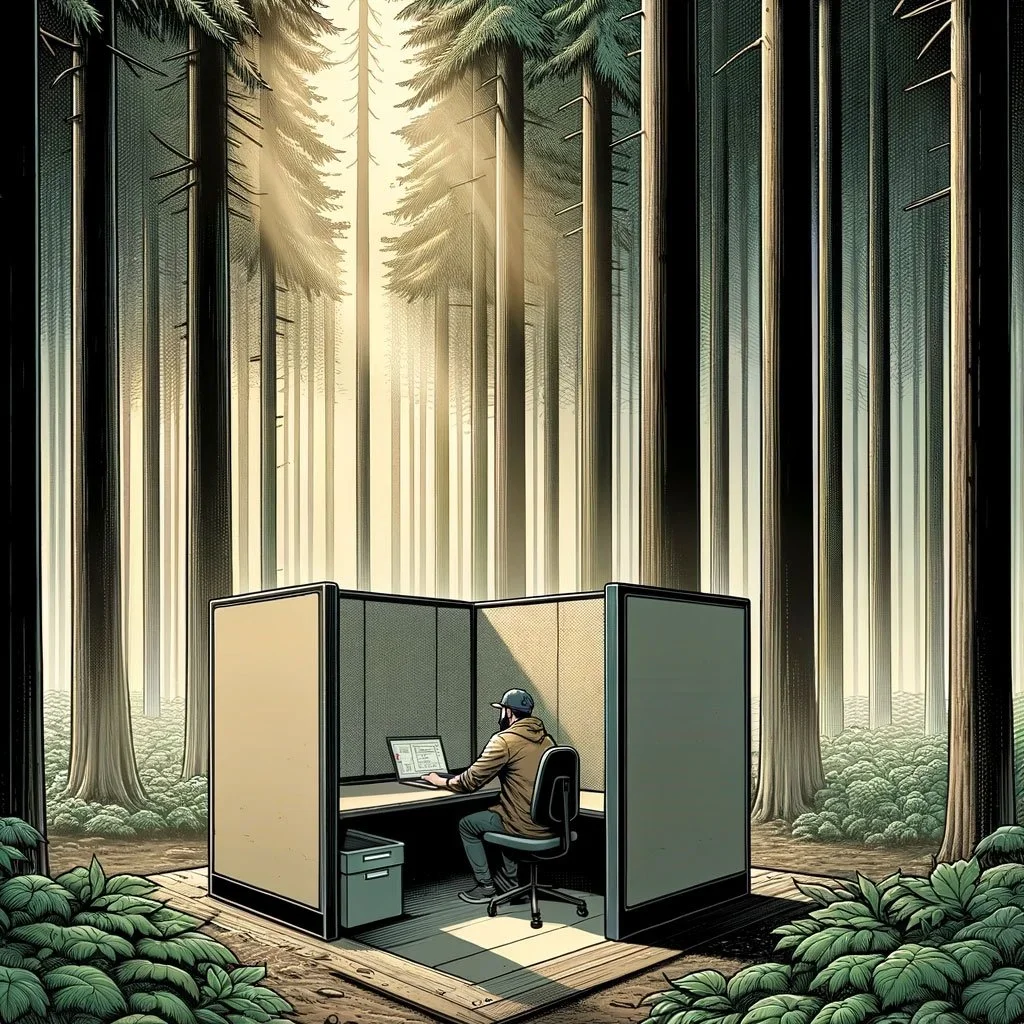
On the trail, the weight of depression lifts. I'm alive in the purest sense, miles from anyone, but never lonely. Even on a rough hike when I couldn’t wait to get back to my car, I still returned to civilization happier, with a fresh appreciation for the things I had been taking for granted—a hot shower, a flushing toilet, a decent meal, a soft bed.
But otherwise, I couldn’t recall a day without anxiety. Even on comparably good days, it simmers in my chest like an unremitting pilot light.
“I just got fed up with being depressed with my life and being afraid to make a big change. To me, the Appalachian Trail seemed like a slingshot—propelling me far away from everything familiar, so I’d be forced to reboot. So I didn’t leave everything to go on an adventure, I’m on an adventure, so I could leave everything."
After I said ‘reboot’ and that I worked in IT, I worried Red might decide Reboot wasn’t a bad nickname for a hiker.
“So what about you? Why are you hiking the A.T.?” I asked.
Red, a cook from Long Island, New York, had come to the A.T. to nudge his life in a new direction.
“My friends were mixed up in some bad stuff,” His tone shifted as he opened up. “Lost one of them a few months ago—heroin overdose. The reality of me dying from that stuff became ever more real. Any one of us could be next. My family urged me to go to rehab, get some help, to make a radical change. They certainly didn’t want to bury me too, or see me continue to suffer. And then my tax return came through, enough money for gear, so everything sort of lined up. In all that mess, I saw a path that wasn’t so messy.”
I couldn’t help but wonder if Red, facing down such dark demons, might have viewed my own relatively demon-free existence as something to be grateful for, rather than something to flee from. But that was just me projecting—Red didn’t operate on those terms.
We returned to the bus station and caught our next ride to Medway. After stowing our packs and boarding, we passed a man sitting alone by the window, a Panama hat with a hawk feather on his head.
“You thru-hiking too?” Red asked, inferring this solely from the man’s hat.
“Yeah,” came his reply, a deep voice breaking into a smile. He might’ve passed for mid-twenties but was only eighteen, fresh out of high school. He wouldn’t know it yet, but soon he’d be known as ‘Moccasin’, a tribute to his Cherokee roots and his choice of footwear at our first camp.
At Medway, we got off the bus to catch our final ride to Millinocket. Walking up the aisle, I noticed a box of CDs for “$10” next to the driver’s seat. The cover featured a black cowboy hat and a rose sitting on a candlelit table. Outside, the bus driving country singer was opening the luggage compartment. Dressed in a cowboy shirt with pearlescent snap buttons, black skinny jeans, and a hefty silver belt buckle. He looked like he’d stepped out of another era, his jet-black hair contrasting his aged weathered skin.
We shouldered our packs and headed toward the A.T. Lodge van where the lodge owner waited. Eager to capture every moment, I searched for my camera bag but came up empty.
As the bus started to pull away, panic kicked in. I ditched my pack and bolted towards the departing bus, waving wildly for the driver's attention. He begrudgingly swung the door open, clearly annoyed.
“I’m on a schedule here!”
Apologizing, I said, “I think I left something behind. Can I check my seat?” Without waiting for the green light, I charged up the aisle, now crowded with Mennonites in bonnets and straw hats. Their tranquil stares followed my frantic search for the camera bag, which came up empty. Defeated, I trudged back to the front.
“I must have left it in with the luggage,” I told the driver, who sighed heavily and, with a hint of reluctance, got up to open the luggage bay. As I rummaged through the bags, it hit me—I had stuffed the camera bag into my backpack’s side pocket.
The driver stood behind me with thumbs hooked in his belt loops and legs bowed, striking a pose like someone who’s frequently on horseback.
“It’s not here, I must’ve left it somewhere else. Thanks for letting me check,” I said, hurrying back to the van. I hopped in the back seat and pulled the sliding van door shut. The camera bag was indeed in my backpack’s side pocket all along. I told Red and Moccasin about my mix-up.
“I got the perfect trail name for ya,” the lodge owner turned to say as he pulled away. “From now on, you’re Panic Button!”