
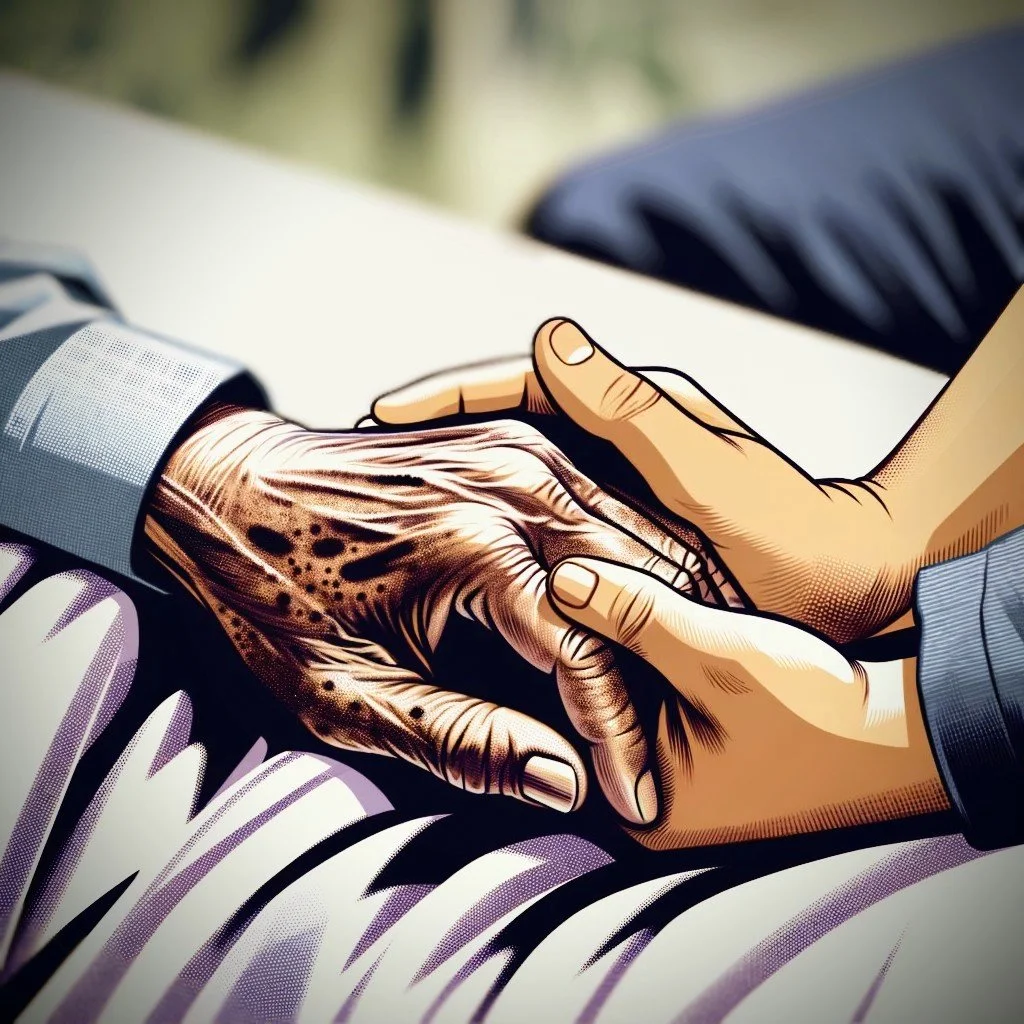


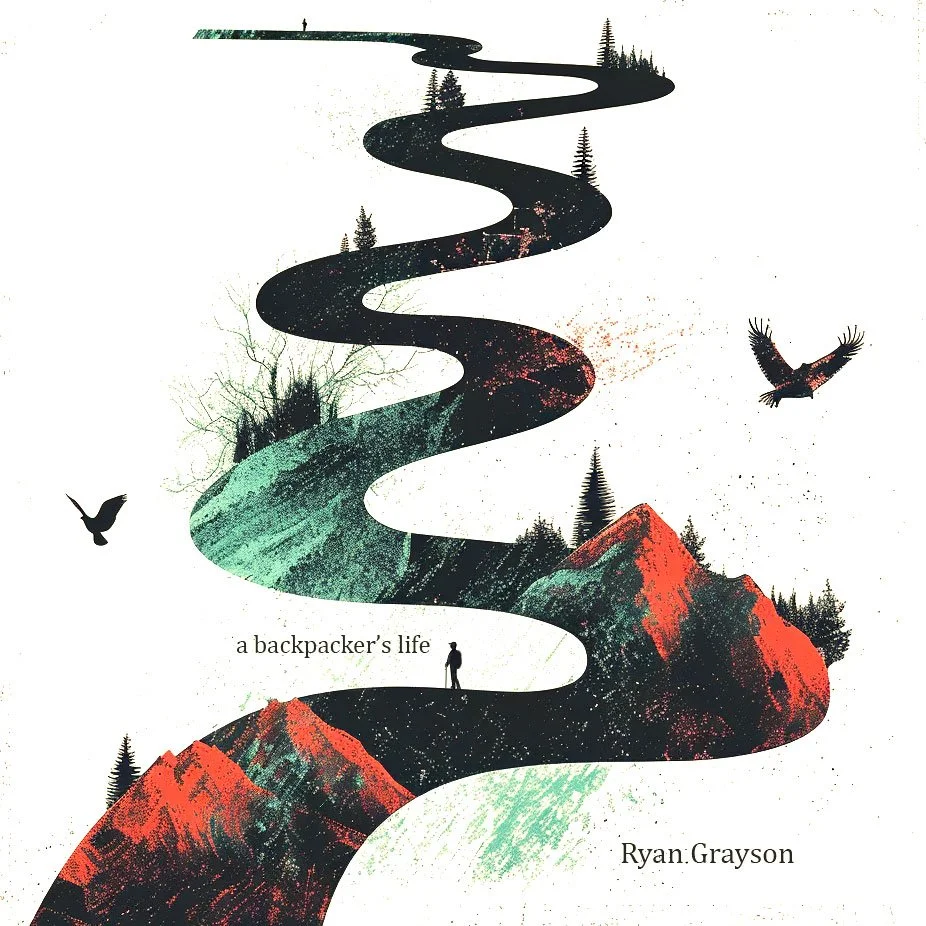
Last Communion
Ryan Grayson
1
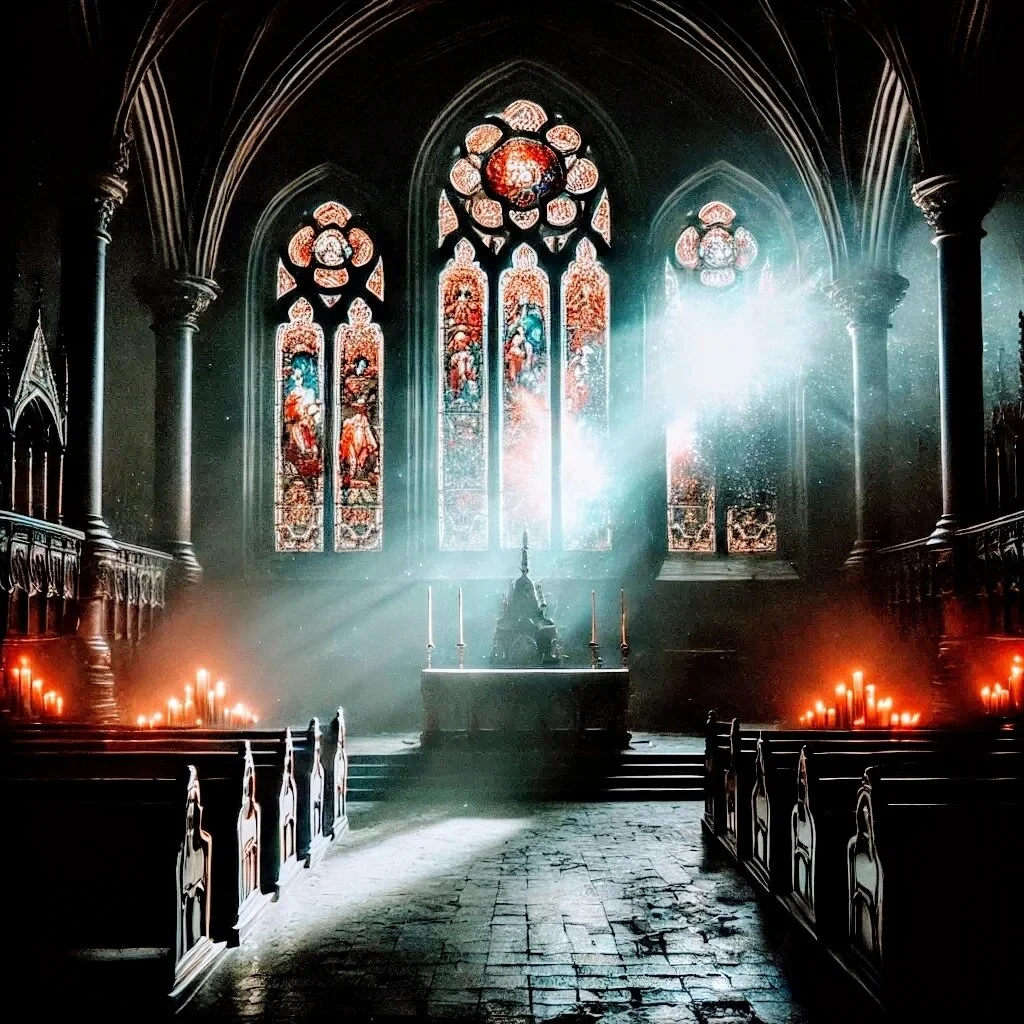
Dusk slipped through the stained glass in fractured bands and stretched across mostly empty pews. A priest ran his hand over the altar cloth, a wave of white linen rolling under his fingers. He turned the chalice a little, then back again.
His hand came to rest on the missal. He traced the leather cover with his thumb, then opened it.
Across the pews, his lone parishioner sat dressed for Mass, poised in a stretch of empty rows. Her name escaped him, but he recognized her face. She’d chosen her usual spot.
Disasters used to fill these pews, he thought. There had also been servers, sacristans, people who shared the weight. Now he alone arranged the sacred vessels. He alone filled the fonts. He alone swept up the broken glass. He alone climbed the choir loft to patch holes with tarp and rope. And it was he alone who went on with the liturgy anyway.
He smoothed the wrinkles out of his black shirt. He'd left the vestments in the sacristy; they felt incongruous with the world outside.
Was it Mary or Maura? Definitely an M name, he thought, but pushed it aside and cleared his throat. The sound echoed off the stone walls then faded.
“In the name of the Father, and of the Son, and of the Holy Spirit.”
“Amen,” the woman, Mary or Maura, replied.
There was a knowing look in her eyes, as if she saw through his act, and it made him feel like one more broken piece among the shattered glass and toppled statues—likely the work of local lads, the priest thought, though that too seemed insignificant now.
The grace of our Lord Jesus Christ, and the love of God, and the communion of the Holy Spirit be with you all," he continued. Same words, same cadence.
"And with your spirit," she replied, resolute, as if nothing around them could touch her.
He had served this parish for nearly two decades, each year shaped by the rhythm of holy days and ritual. He could still remember his ordination—the bishop's hands on him, the swell in his chest, a current of certainty that he'd been chosen for something higher.
His hands tightened on the edges of the pulpit.
"My dear friends. We gather here tonight, in this holy space, as the day gives way to night, as we’ve done so many times before. We seek God in the stillness, in the quiet moments when the world seems lost, when the darkness feels close.
“But what happens when that stillness feels more like emptiness? When the quiet is too quiet?”
His gaze dropped to the floor, then fixed on a crack in the stone.
He used to think his faith needed doubt. It kept him honest. But the more he saw, the harder it was to justify. Not just one tragedy, but patterns. Good people suffered. The cruel thrived. And all of it was met with silence.
For a while, believing that suffering had purpose was enough. The Lord works in mysterious ways, he’d said at bedsides and graveyards, or that it was all part of His plan. After all, that silence wasn’t proof of God’s absence, just the space where faith lived. But he’d come to realize that doubt lived there too.
His voice cracked, but he went on.
“We’ve all walked through the valley of the shadow of death—some more than once. We’re told we’re not alone in those moments. That God walks with us, guides us, comforts us. But I know… I know how hard it is to hold onto that promise when the shadows seem so thick, when the valley stretches on with no end in sight.”
He listened to his own voice rise and fall in all the right places.
“I wish I could tell you that faith is always a beacon, a light that never dims. But faith can be fragile. It can flicker in the wind. And when it does, it’s easy to wonder if we’ve been left alone in the dark.”
His fingers traced the edge of the page. “During these long, quiet hours, I’ve had to sit with doubts I pushed aside for a long time. But faith isn’t about never feeling doubt. It isn’t about never questioning or never fearing the dark. Faith… real faith… is about taking the next step, even when you can't see the ground beneath you.
“We are not alone in this valley, even if it feels that way.”
He looked out over the empty pews.
“Maybe the light returns. Maybe even the smallest flicker is enough to keep going.”
He took a breath, then picked up the Bible and read from Ecclesiastes:
“There is a time for everything, and a season for every activity under the heavens: a time to be born and a time to die, a time to plant and a time to uproot. A time to weep and a time to laugh. A time to mourn and a time to dance…”
His voice cracked again. He stopped. “The Word of the Lord.”
“Thanks be to God,” she said.
He came down from the pulpit. His footsteps echoed through the nave. As he passed, the candlelight quivered across the stone walls.
She looked up at him expectantly, but he didn’t know what to say. He just sat beside her. The pew creaked beneath him.
She spoke first.
“What’s on your mind, Father? You seem troubled.”
He searched her face for any trace of sarcasm and found only the slight tilt of her head, the forward lean of her posture.
“Mary, isn’t it?”
“Helen,” she said, not unkindly.
He nodded. "Right. Helen." For once, the right words didn't come. "Do you think it might be the imminent extinction of humanity?"
“I’ve been on this earth a good long while, Father. Long enough to fret over every kind of trouble you can imagine. And you know what?”
He gave a small shrug.
“All that worry was just like chasing the wind. Everything has a way of…” She paused, eyes drifting past him. “a way of…”
“Sorting itself out?” he offered, glancing over his shoulder but seeing nothing.
She nodded slowly. “Yes, that’s right. Every time.”
“Until it doesn’t,” he said, eyes settling on the broken stained glass, the colours fading with the light.
“We’re on the brink, Helen. The final hours.”
She studied him. “Why do you reckon we’re the only ones here?”
For years he'd asked himself why he kept returning, but never found an answer. He wasn't expecting one now.
Her calmness unsettled him. Clearly she already knew the reason, and was just waiting for him to catch up. It reminded him of everything he'd given up for the Church, and everything the Church never gave back.
He kept his eyes on the altar. “I don’t know why I keep coming back,” he said. “Habit, maybe. Or because without this…” He touched the collar at his throat. “I wouldn’t know what to do with myself. People forget there’s a person under it. You wear it long enough, so do you.”
She just sat there, back straight, hands in her lap, watching him with a sympathy that made him feel small.
“You think I don’t want to believe?” he said. “I do. More than anything.
"People would come to me, looking for something. Guidance, comfort, whatever it was they thought I had. And I'd give it to them. The right words. The right tone. But half the time I was thinking, if they could see what was really going on in my head… And the worst part was, they walked away comforted. And they thanked me for it."
She didn’t respond.
“I remember when it felt real. Not just the scripture or the stories, but God’s presence.”
He met her eyes, just for a second, then looked away.
“It used to feel like sunlight on my skin. And now it’s like… trying to warm myself with the memory of it.”
He took in a slow breath. “I wonder if I ever truly believed, or if I just needed to. I remember having doubts, even early on. Not about God, not at first. But about the stories. A man surviving three days inside a whale? Or building a boat big enough to carry every kind of creature over a flood. I used to tell myself it didn’t matter if they were real. The meaning was what mattered. The stories pointed to something deeper.
And that worked, for a while. But then I started to realize that most stories do that. Novels, films, myths. They all carry symbolic weight. That doesn’t make them any truer than Harry Potter.
“The more I studied, the harder it became to draw the line. If Jonah’s just a metaphor, what about the parting of the Red Sea? A divine miracle, or a metaphor for faith overcoming impossible odds? Did Jesus raise Lazarus, or was it just a metaphor for spiritual renewal? What about the virgin birth? Or the resurrection of Christ?
“And when all of that falls away… what are you left with? Is God just symbolic too?”
He shook his head. “If you stop believing any of it’s true, you can’t build a life around it. Not really.”
He ran his hands over his eyes. “The world right now... it only makes sense to me if there’s nobody at the wheel. Do you see that? It isn't malice or punishment. It’s just physics. The stars move. The earth spins. And then, out of nowhere, something just happens. A shift, a burst of energy. The universe doesn’t notice or care that there are humans in the way.”
He looked at her. She still hadn’t moved, hadn’t spoken. Just sat there, watching him. Like she was waiting for more. Like she knew he hadn’t really said it yet.
He shook his head and gave a short, dry laugh.
“You don’t just leave the priesthood. It’s not like quitting a job. It’s not only your work, it’s your home, your community. The only thing that gives your life meaning.
“And what would I have fallen back on? A doctor leaves a hospital, he’s still a doctor. Still respected. Still has a family. A name. A sense of who he is.
“But if the parishioners knew I didn’t believe? They would have turned on me.
"I gave them twenty years. My youth. My chance for a normal life. Love. A family. If I walked away, all of it was for nothing."
His voice shook and he stood up, his words coming faster, more frayed.
“And now it’s almost over. Not just us. Everything.
“I keep thinking about how long we’ve been here. How many lives came and went before us, believing things, building things. The prayers, the plagues, the wars, the art. People falling in love under empires that don’t exist anymore. Children playing in streets no one remembers.
“All of it, layer after layer, just to get here.
“And we learned so much. We learned how to split atoms and save lives from the brink of death. We learned how far away the stars are, and how unlikely it is that we’re even here at all.
“And still, it will all disappear. Just like that.
“What was it all supposed to amount to? What was the point?”
His eyes misted over, and he looked to the ornate ceiling above the nave.
“I had a beautiful garden once,” she finally said.
He turned to her. She was still looking past the altar, like she'd forgotten he was there.
“My cherry blossom, that was the crowning glory.” Her expression softened and she closed her eyes.
“Henry and I would sit under it. Just enjoying each other’s company. It was…” She drew in a breath and smiled. “…so lovely.”
His mouth twitched at one corner. He watched her for a moment, then sat beside her again. “I understand,” he said.
“Understand what?” she asked.
“The beauty of impermanence. That a thing doesn’t lose its meaning just because it ends—that it has meaning because it ends,” he replied.
She smiled.
A dull regret crept in. She’d lived a long full life. She’d known love—the kind he’d turned away from when he took his vows. Maybe her calm didn’t come from faith, but from that. From living. But he hadn’t done that either.
A crash rang out as stained glass hit the floor. The priest turned. Dust drifted through the slant of light pouring through the broken window, where scenes from Genesis had once glowed in vibrant colour. Helen didn’t flinch. She just watched him, hands still folded in her lap.
“I’m the one who’s supposed to be comforting you,” he said. “But it’s been the other way around.”
She watched him as if waiting for him to go on.
“You seem troubled, Father.”
“I know you mean well, I do. But I can’t sit here and pretend everything—”
“Everything has a way of sorting itself out in the end,” she said.
“No, Helen, it doesn’t. Not always. How can you stay so calm with the world outside…” he waved towards the broken window, where wind howled into the church. “…falling apart?”
“I had a beautiful garden once,” she said.
“I don’t care about your garden!” He hadn’t meant it to sound so harsh.
“My cherry blossom, that was the crowning glory,” she said. “Henry and I would sit under it. Just enjoying each other’s company. It was…” She drew in a breath and smiled. “…so lovely.”
Same tone. Same timing. No hint she knew she'd said it before.
As if her mental clock had been rewound. If time could be rewound, would everything play out the same, repeating the same words and the same mistakes?
He started to put an arm around her, then set it on the pew behind her instead. She didn’t need his sympathy. In fact, he envied her. What he would give to escape into an echo of a mind lost in time.
After a while, she turned to him. "Father, could you give me a wee minute alone? I'd like to light a candle for my Henry and have a little word with the Man above for him.”
She stood with one hand braced on the pew.
He guided her towards the candles with a light touch on her elbow.
She lit a taper from the central flame and brought it to her candle. He watched her in silence. She didn’t need his company. She was, in her own way, going to be just fine.
“Helen, I just need to get a bit of air. Stay as long as you like.”
He stepped outside. The air had that late-day warmth that lingered before dark.
From the open door, her voice reached him, soft and marked by pauses as though in conversation. He couldn’t catch the words, but there was a rhythm to it, a back-and-forth, like she was listening as much as speaking.
He watched the last of the sun slip behind the trees. He wondered if he’d ever see another sunset.
He hadn’t heard her footsteps, but suddenly she was beside him.
“Helen,” he said, startled. “I didn’t realize you’d finished.”
He looked down the street, then back at her. “Let me walk you home.”
“Oh, no need, Father. I live just around the corner,” she chuckled.
He didn’t know that. He should have.
He offered his arm anyway and she took it.
He opened his mouth to say something, maybe an apology, but Helen began to hum a tune before he could speak.
They walked past the shut-up shops and the weeds pushing through the cracks in the road and footpath. The wind stirred dry leaves in small circles. Her melody slipped into the empty streets, restless as the wind through broken windows.
They reached her home faster than he wanted. The walk gave him no answers, and he did not want to be left alone. She let go of his arm. He felt the warmth of her touch fade.
“Goodnight, Helen.”
She said nothing and kept humming.
The houses stretched out ahead. No light in the windows. No voices. No footsteps.
He turned to go and saw it. A column of smoke rising in the distance, an orange flicker behind rooftops.
He stared for a moment, then finally recognized Helen’s song.
“Ubi caritas et amor, Deus ibi est,” she sang as she climbed her front step.
He looked towards the fire. Likely just another blaze in a ruined city, but he let himself see it differently, as a lighthouse. Helen’s door clicked shut.
Now, left alone in the valley of the shadow of death, he began to walk.
2
As daylight faded, a young woman approached her childhood home, slowing as it came into view.
The house sat alone at the end of the street, its weather-beaten façade washed pale in the dim light, the curtains drawn.
Inside, her torchlight sliced through the darkness, catching dust motes swirling in the stale air.
After weeks on the road, the relief of seeing the area evacuated was short-lived. The signs of the family who had lived there after her were disorienting, every unfamiliar detail a distortion of her past. The bones of the house were still there, but it wore a false skin. Like a serial killer donning clown makeup to appear harmless.
She slid her rucksack off her shoulders and walked down the hall towards her old bedroom, her fingers brushing walls lined with smiling family photos. The images clashed with the memories that surged back—her father’s heavy footsteps, the men he let into her room, the stink of stale booze, the grip of fear.
She stopped at the doorway, heart pounding. Her hand closed around the door knob, but she hesitated. Then, with a breath, she pushed the door open.
Her torchlight swept across a room remade into a child’s sanctuary—pink walls, unicorn posters, princess dolls, a sea of soft toys.
Dust covered everything, but it still looked like the bedroom of a happy child.
She sank onto the bed, tears blurring the cheerful colours. Her body shook with sobs as she faced what her childhood should have been.
Wiping her eyes, she got up and stormed down the hall. In the living room, she dropped the torch and yanked open her rucksack, pulling out a tin of white spirit. She tore off the cap and poured it across the carpet and furniture, her voice rising with fury.
“How could you?! How could you do it?!” she screamed. The heavy, oily reek of white spirit filled her nose, mixing with the must of old wood and damp. “You knew! You knew and you did nothing! You just sat there! I was only small! I was a child! You just sat there and let them!”
She hurled the empty tin across the room and watched it rattle to a stop near the dusty sofa.
With trembling hands, she struck a match. The hiss of sulphur cut through the stench of the white spirit. She lit the rest of the match heads and flicked them onto the soaked carpet. Blue flames tore across the floor.
She sank into a corner, spent. The fire took the furniture, climbed the walls, and stripped the curtains.
She thought of staying. Leaving it all behind for good. But as the heat closed in, the instinct to live won out. She snatched up her torch and rucksack then bolted for the street.
She turned. The house was lighting up the block. The fire moved faster than she expected. The heat hit like an open furnace. The windows blew out. Glass sprayed the garden. She moved away as the smoke billowed. The roof collapsed, sending a swarm of sparks into the air.
The firelight flickered across her face as she watched the levelling of her childhood home.
She sat on the grass next door, as close as she could bear to the heat and the stench of scorched wood and melting plastic.
In less than an hour, the house was gutted, a blackened skeleton with flames picking at the remains.
She let out a breath, expecting relief, but it didn’t come. She felt hollowed out. She pulled her knees to her chest and sat in the quiet, the finality of it all closing in.
"If you were ever going to show your face," she said quietly, "this would be the time." She hesitated. "God?" The word felt wrong. "If you’re there, I need something. We both know you fucking owe me.
“How could you turn your back on a wee girl? When she was looking for you? What kind of a creature does that to a person?”
She pulled her knees tighter and sobbed.
“You left me to it, to find my own way. I did things I can’t bring myself to put a name to.” She wiped her nose with the back of her hand. “I’d ask for forgiveness, but you never lent an ear then. Why would you bother your head now?”
She let out a dry laugh through her tears. "Why does this feel like another shitty relationship? Still chasing after a bit of approval from someone who never cared if I lived or died.”
Her shoulders dropped.
“I haven’t a clue where to go. I feel well and truly lost.” Her sobs came in ragged gasps. She took a breath to calm herself. “Just show me there’s some hope left. A reason to believe. The bare fucking minimum. Could you manage that much for me?”
She swallowed hard. "I know I’ve fucked up. But if there’s a life after this one... I don't know. I just want to believe there’s room for me."
"And if this is the end," she gestured to the sky, then dropped her hands into her lap, "then help me be at peace. Or at least let me spend the time I have without the same shite screaming in my head."
The fire died down to a low hiss. She looked up for the stars but found the sky blotted out by smoke. She let out a slow breath. "Please." She sat in the quiet, rubbing her arms against the chill.
A faint scuff of footsteps made her flinch. She turned. A figure stepped from the shadows, tall and dressed in black. She planted a hand on the grass and started to scramble back. Then she saw the white collar.
3
As the priest hurried towards the smoke, his own selfishness came home to him then. He’d turned to an old woman because she was the only one left to listen. Helen was back there with her cherry blossoms and her peace, and he hadn’t even considered her feelings, just wanted to unburden himself.
I don’t care about your garden. It was the only honest thing he’d said in twenty years.
He had spent his prime flogging a cure he didn’t even buy himself. What hurt most was what he had given up for it. He thought about a life he had missed out on. A father crouched on a footpath tying his daughter’s shoelace while she chattered at him. A man lifting a sleepy child from the back of a car and carrying him inside without waking him. The kind of moments he used to notice and then pretend not to want.
He imagined what it might have been like to fall in love. A wife opposite him at a kitchen table. Her face when she laughed at something stupid he said. The ease of being known by someone over years instead of hours, a life built day by day.
Then the thought turned, as it always did, to the part he tried not to name. The ache of wanting and being wanted. The warmth of someone under the same blankets. Bare skin against his. Her breath near his neck. The comfort of holding someone close enough to feel her heart beating. He had denied himself all of it for so long that now, with the world ending, its absence felt less like virtue and more like loss.
At the end of the road, the house was a collapsed cage of blackened rafters, with orange still glowing low in the wreckage.
He was close enough to feel heat when he heard her voice. He stopped. She was in the grass, knees pulled to her chest, watching the wreckage.
He caught himself staring and looked away, like always. The way she dressed had none of the modesty he was used to. But tonight, with the world coming apart, he let his eyes drift back to the way her clothes clung to her. The way they exposed skin he’d never let himself look at beyond a glance, the curve of her hip bare above her waistband.
Then he realized she was praying.
He froze mid-step. He hadn’t meant to eavesdrop, but now he was too deep in it to pretend he hadn’t heard.
She flinched at the sound of his footfall and turned towards him, planting a hand behind her and drawing her knees in tighter, until she saw the collar. Then she just stared.
Firelight lit one side of her face, catching the wetness beneath her eyes.
“Hey,” she said, wiping away her tears with her wrists. “Are you lost, or is this some kind of divine intervention thing?”
He rubbed the back of his neck. “Hey-lo. Hello. Hi. Hey.” His eyes stayed on the fire. “Sorry. I saw the flames and thought maybe someone was… are you hurt? Is anyone else—?”
“No. It was abandoned. Had been for a while, from what I could tell.” She didn’t look at him, just stared into the flames. “For some reason I thought it would feel more satisfying.”
“So, this was you then?”
She nodded.
“You know every building is already marked for destruction, including this house.”
She shot him a look. “I’m well aware,” she said, then turned back to the fire. “Couldn’t stand the thought of some random cosmic bullshit getting the satisfaction.” She wiped her eyes again. “This was mine to burn.”
“What happened? Why this of all places?”
She looked at his collar, then back at him. “Probably what you think,” she said. “Times ten.”
“Your father?”
“Times ten.”
“I’m sorry.” The words came out before he could think what else to say. He glanced at the wreckage, then back at her. “I heard you praying. The bit about forgiveness.” He hesitated. “I don’t know what happened here. But whatever you’re carrying, I doubt it started with you.”
“Were you eavesdropping?”
“You were kind of shouting it.”
She nodded. “Thought I was alone. Don’t know why I prayed. I’ve never really been the religious type. Nothing personal.”
“There are no atheists in foxholes, or so the saying goes,” he said, lowering himself to the grass. “But after all the faces I’ve seen in hospital beds and funeral homes, I’d say in the foxhole, we’re all agnostic.”
“If God’s out there, he’s a bastard,” she said, brushing away another tear.
He nodded. “Hard to argue with that these days.”
She squinted at him. “Are you actually a priest, or is that just a costume to keep you safe from murderers and rapists?”
“Technically speaking, I’m a parish priest.”
“Is there a difference?”
“Not much that matters anymore.” He started to say something else but stopped. “You know… forgiving them can be powerful.”
“Forgive God? Isn’t it supposed to be the other way round?”
“It’s not about them,” he said. “It’s not about pretending any of it was okay. It’s just saying you won’t be carrying it around anymore.” He shifted his weight. “Sorry,” he said, looking at her. “I do this. Try to fix things nobody asked me to fix. And this,” he tapped his collar, “doesn’t mean I have the answers. So… Maybe a good first step is letting it out. If all you’ve got is rage, then use it. So yeah, fuck them all. Times ten.”
She let out a laugh. “I might’ve gone to church if they preached that.”
“I doubt the higher-ups would sign off on my ‘fuck-them-all’ sermon.”
“Higher-ups,” she said. “I suppose that means something different in your line of work.” She looked up at the sky. He followed her gaze. The stars were starting to show as the wind pushed the smoke aside.
“Somewhere along this weird little pilgrimage,” she said. “I ran into these people. They called themselves missionaries. They were cult members, really.” She snorted. “Too cheerful. Too eager to talk about their church. And there was something off in their eyes.”
He smiled.
“They called themselves the Wayfarers of the Church of the Cosmic Ascent. Or Stellar Ascension. Something batshit.”
She picked a blade of grass and rolled it between her fingers. “They worship these aliens with technology that can do anything. Make anything. Cure anything. Stop you getting old. Make you live forever.”
She tossed the blade of grass. “Because who wouldn’t want to live forever in this absolute shit show, right?” She swallowed, plucked another blade, and tossed it aside.
“Anyhow, they said all this is just a transition. A purification. Getting ready for some higher existence.”
“Their leader claimed she was a hybrid, part human, part… one of them. Said they’ve been watching us for centuries, waiting to step in and save a chosen few.”
She brushed hair from her face. “But only if you ‘align with their values and frequencies.’ Whatever the hell that means.”
“It’s easy to write them off as mad,” he said, “but it’s a familiar story, isn’t it? A chosen few being saved and taken to a better place, free from suffering and death.” He wiped ash from his trousers. “Aliens instead of angels.”
“I get what you’re saying,” she said. “But trust me. You didn’t look in their eyes.”
“Fair enough.”
“It’s wild,” she said. “The stories people tell themselves so they don’t have to believe this is it.”
“What else have you heard?”
“Plenty still think the scientists got it wrong. Even after every country on earth confirmed it, even the ones that hate each other.” She shook her head. “Then there’s this group who swear it’s all a hoax.”
“That doesn’t surprise me.” He brushed ash from his sleeve. “So what’s their version?”
“That it’s a coordinated power grab,” she said. “The government, the news, all of it. They said the numbers are fake. They said the panic is the point.”
“Did they seem sincere?”
"Oh yeah, absolutely. Anything you throw at them, they've got an answer ready."
"Unfortunately, having an answer for every doubt isn't the same as having evidence. It's just storytelling. I suppose it's less scary to think someone's pulling the strings than to accept how fast it can all unravel without any help."
“They’re harmless, really. It’s just how they cope.” She shrugged. “I don’t buy any of it. But I like listening to people who still hang on to hope, even if it’s laced with anger and nonsense. Who knows? Maybe one of them is right.”
He pressed his lips together, then just said, “Maybe.”
“I kept hoping one of the stories would resonate.” She looked down. “I’d give anything to believe this wasn’t the end. Even if it wasn’t true.”
He said nothing.
A gust carried the smell of smoke back down the street. She rubbed her arms again, then gathered her coppery hair and draped it over one shoulder. He stared at the curve of her neck a moment too long.
She met his eyes, then covered her neck with her hair. He looked away and his stomach dropped.
“So, em, tell me more about yourself,” he said, nervously adjusting his sleeves. “You called it your weird pilgrimage earlier. Where did you come from?”
She pulled an overshirt from her rucksack and slipped it on without buttoning it up. “A place I’d rather leave behind. A couple of hundred mile back.”
"That's a long way to burn a house down."
"Aye, maybe I'm the mad one." She glanced at him, then looked away. "I just thought it might help me draw a line under it all. Or at least give me a change of scenery. Make the days stretch out a bit, you know?"
"I do, yeah."
"I just needed to do something other than sit around and wait. This goal seemed as good as any."
"And you walked all that way? I can't imagine there were many other options."
"Mostly walked, yeah. I found a bike, but it got a puncture after a couple of days. So, went back to my two feet, walking the empty roads in the day, settling into abandoned homes before the sun went down.”
She pushed herself off the grass and brushed her clothes. "My legs are gone stiff. I’m gonna go have a look at the state of it."
She began walking across the lawn towards the glow of the fire. The priest got to his feet to join her.
"So what's it like out there?" he asked. "Did you run into any trouble?"
"You'd be surprised," she said. "It wasn't like those first few weeks. It's mostly just quiet now. Less of everyone looking out for themselves. More of a sense we're all in it together. The psychos are well outnumbered, but I’m sure they're still about.
“One night I passed a brick building at the edge of a town. The bottom windows were smashed out and barricaded from the inside with cabinets and desks. Through a gap I saw two young girls standing against a wall. Just staring at the floor. Then I saw a couple of men with heavy rucksacks go around the back."
They stopped ten feet from her childhood home. It had folded in on itself. The timber frame had burned through, dragging the outer walls down into a heap of broken blockwork and shattered slates. The insulation had melted into a black, glassy slag.
“I’m afraid to ask what happened next,” he said.
"I put my head down, and kept walking," she said. "Just kept my eyes on the footpath."
She stared down into the crater. Her childhood bedroom, where she had stood earlier, was gone, reduced to a pile of glowing ash. A twisted, blackened wire mattress spring rested crooked on a scorched joist. She nudged a piece of scorched wood into the pit with the toe of her shoe.
"I made it one block before I stopped,” she said. “I knew I'd never get those girls' faces out of my head. I didn't have a plan. I just circled back around the alley and looked through the open door. I was bracing myself for the worst.
“I walked up. Slow. I almost turned around and ran away, if I’m honest, but I stopped at the door.
“It wasn't what I thought. The men were unpacking their bags, pulling out blankets and tinned food they’d scavenged.”
She crossed her arms and looked across the smoking ruins.
“There was a little community in there. They'd brought in old sofas and rugs. Made it feel like a home. A woman saw me and pushed the door open wide. Just asked if I was hungry. Like I had just gotten in late. She moved aside and told me there was food on the table and plenty of empty beds if I needed one.
"I ate first. I figured I'd sleep a few hours and leave before anyone started asking questions. But nobody did. In the morning somebody told me to grab a plate before it was gone.”
Smoke drifted across them and she paused, holding her breath, eyes closed tight until it passed.
"I ended up staying a few days. Just kept out of the way at first. Then I saw a woman trying to sort clothes while she kept getting pulled away, so I sat down and started folding. There was this little girl who kept orbiting me. First she just watched me. Then she started bringing me things. A toy. A bit of ribbon she'd found. Later I used it to tie off the end of a plait after I did her hair. She sat in front of me just chattering away like she wasn’t bothered by anything.
"The next night she woke up screaming from a nightmare. I was on my feet before I knew what was happening. So was half the room. Her da got there first. Someone brought water. Somebody else got a blanket. One woman started talking to her soft, like she'd done it a hundred times. And she calmed down because they knew what to do. They knew how to hold a scared kid. All of them. Like it was nothing. Like that's just what you do."
Her jaw tightened and she swallowed.
From somewhere inside the collapsed house, a flame flared up, washing them in orange for a second before dropping back into the glow.
"Anyhow, I was back on the road before dawn."
She looked away from him, sniffed, and wiped at her eyes as her gaze drifted over the dark street and the empty houses beyond it.
A shift in the wind pushed another thick roll of smoke towards them. The smell came with it, thick enough to sting the back of their throats. She turned her head and coughed into her sleeve.
“Christ,” she muttered.
The priest stepped back from the smoke and heat. “Let’s move down a bit.”
They walked along the edge of the garden until the air cleared. The glow of the house still lit the street behind them, but the smoke drifted the other way now.
Then she touched his arm and lowered herself onto the grass.
"Look."
A deer stepped out from the trees into the open. It paused, ears twitching, then lowered its head to graze. Two more came out behind it and spread across the grass.
He sat on the grass beside her.
"It's strange," she said, her voice low. "I've seen a lot of towns like this. Empty streets. Abandoned shopfronts. Cars left where they died. Most people headed for the cities, or the burrows, or wherever they thought they still had a shot." She kept her eyes on the deer. "But then you get this. This quiet. Almost better, in a way. Like the world without us can finally breathe."
They stayed still, not wanting to spook them.
"There've been mass extinctions before,” he whispered. “Life never stopped. It just started over in different shapes. Maybe this time won’t be any different.”
He turned to her. “Why didn't you go down with the others?"
She let out a huff. "Down where? The burrows?" She shook her head. "Seems like hell to me. Best case, you spend whatever time's left sitting under concrete and dirt waiting. I'd rather die with the sky over my head."
She stretched her legs out in front of her. "And I don't believe half of what they're promising anyway. Say the burrows hold. All you've bought yourself is more time in the dark before the same ending, only dragged out." She glanced at him. "Besides, they weren't taking people like me."
He looked at her. "What do you mean, people like you?"
She gave him that lopsided smile. "Doctors, engineers, people with letters after their names. Despite mine being the world's oldest profession, it didn't exactly make the cut."
Heat rose under his collar. He cleared his throat. "That doesn’t… everybody deserves a chance."
She gave a small shrug. "It's fine. I know how people see me. Everybody does what they can to get by."
He nodded. "For what it's worth, I think you chose right."
Her eyes narrowed a little, not unfriendly. "Yeah?"
"I'd rather be out here too, under the sky," he said. "If this is it."
She shifted and pointed towards the deer again. "They remind me of this town I passed through. There was a piano in the middle of the street, just sitting there. From far off I thought it was another deer. Then I got closer and heard it."
She glanced at him. "An old man was playing. Right there in the road, like he was in his own front room. He never even acknowledged that I was there.
"The song was sad. Really sad. It felt like his life story was in those notes. It carried down that empty street and made it feel even emptier. But it hit me in this strange way. It made me feel happy."
He nodded slowly. "That makes sense to me. Melancholy."
She studied him for a second, then looked away.
"I haven't heard live music in so long," he said. "Just scratchy old hymns on a wind-up gramophone we have at the church.
"I suppose as long as there are people, there'll be art," he said.
"In one city, I passed a graffiti artist. He had this massive mural on the side of a building. In the middle, in big letters, it said WE WERE HERE. Around it, he'd painted this collage of everyday life. It looked like his memories at first, but he kept asking people passing by to tell him their life stories, and he was working those in too.
"He had piles of spray paint tins scattered around him, like he'd cleaned out every hardware shop in the city."
The priest was quiet a moment. "He wasn't just painting a wall."
She watched him, waiting.
"He was letting them leave something behind. Letting them linger a little longer."
She held his eyes a second, then looked away.
"Yeah.”
"Did you add one? A memory?"
She shook her head. "No. At the time, I didn't have any memories I wanted to... linger."
"And now?"
"Now?" She sat up a little. "Now I just want to make new memories..."
She took a breath, letting the lump in her throat settle before speaking again.
“You ever think about how weird it is that we remember anything at all?”
“Hmm.”
“I mean, I remember the first time I rode a bike. I was eight. And I can still feel it—that second I was going fast enough, and it felt steady under me. And it all made sense.”
“I like that. That you can still feel it,” he said. “I still remember the first time I walked into the corner shop with my own money. Bought a fizzy drink and walked all the way to this stream. Sat on the bank, drinking it slow. It felt very adult.”
“It makes me wonder—what’s the last thing I’m going to remember?”
“I think about that too.”
“I hope it’s something peaceful. Just a nice feeling. Like hearing rain outside and knowing you’re inside for the night,” she said. “Or waking up before dawn and realizing you can go back to sleep.”
“Yeah,” he said. “Those are good ones.”
“What about you? If you had to pick?”
“I have this memory of my dad driving. The way he used to hold my mum’s hand, or rest his hand on her knee. I don’t know why that’s the one that stays with me.”
“Well now mine seems daft,” she said, exhaling, not quite a laugh.
“No, it’s not daft. A little time where there’s nothing to worry about and nothing you need to do... that’s a great feeling. I can’t remember the last time I felt that.”
“You ever think about all the things you’ve done for the last time without even knowing it?” she asked.
“What do you mean?”
“Like the last time you climbed a tree,” she said. “Or caught a frog and felt it wriggling in your hands before you set it free.”
“I used to draw when I was a kid,” he said. “Not anything good, just little things. Characters and spaceships. I probably stopped when I was, what, twelve? Thirteen? I don’t remember the last time I did it. Just one day I never did it again.”
She nodded. “I used to step in puddles on purpose. Not splashing, just barefoot, slow enough to feel mud squish between my toes. Sometimes I imagine telling myself back then, ‘This is the last time you’ll do this, so pay attention.’ I would’ve been so sad.
“I don’t like that we don’t get to know,” she said. “That we never mark the moment.”
“Yeah,” he said. “But maybe that’s better. If we knew, we’d try too hard to make it count. It wouldn’t feel the same.”
Both of them fell quiet, caught in their own memories.
“You know, when I first heard the news, I didn’t react the way I always thought I would if somebody told me I was going to die. I didn’t panic. I didn’t fall apart. All I felt was calm. Just this deep... relief. All the endless shit life threw at me... in an instant, none of it mattered. The anxiety I’d been carrying around for years just lifted.”
She glanced at him, surprised to see a look of understanding on his face.
“It can wear you down,” he said. “Living that way. Sometimes the fear takes more out of you than the thing itself.”
She ran a hand through her hair. “Somewhere along my walk here, something changed. I started seeing things differently. People, life, all of it. And now... now that I actually want to live, there’s no time left. It’s like...” She shook her head and swallowed. “It’s like some sick joke. Like I finally started to get it, and now it’s over.”
Tears began to spill down her cheeks, making her words come out in shaky bursts. “I finally started to work it out—finally started to give a shit—and now it’s all going away. And I—I can’t stop it. I can’t do anything. I can’t—”
“Hey, look at me.” He took her hand. “You found it. That’s all that matters. There’s still time to feel what you’ve found. That’s still yours.”
She took a slow breath and wiped her eyes. She rested her head back on her knees and stared at the ground, idly pulling at the grass until her breathing slowed.
"Do you ever wonder what happens next?” she asked. “I mean, I suppose you don't. You've got it worked out with heaven and hell, right?"
He thought of a cherry tree in full bloom.
"Of course I wonder. I think everyone does," he said, choosing his words carefully. "The Church teaches that after death there is judgment. Our lives are weighed before God. Some souls go to heaven, some to purgatory, and some are separated from God."
He glanced at her. "And it teaches the resurrection of the body. In the end, it isn't only the soul. Heaven, in that belief, is union with God. Peace. Love. A return home."
"That's what the church teaches, sure, but what about you? Do you believe it?"
He resettled on the grass. "There are many different beliefs about what happens after death. People find comfort in different ways. In Buddhism, there's reincarnation, a cycle of lives shaped by what came before."
"I never liked the idea of reincarnation," she said. "Becoming something else with no memory of what came before... that still just sounds like death to me." She looked at him. "And what does that even mean when everything's wiped out? There'll be nothing left to come back as."
"It was never only about this world," he said. "They believe there are other worlds. Other cycles. The wheel keeps turning after any one place is gone."
"Handy, that. There's always another world."
He smiled. "Every story has an answer ready."
"So what's the ending? Of their story."
"Eventually, you achieve Nirvana. A release from the cycle. A state of ultimate peace."
"I don't know. That still sounds like the end of you." She hesitated, then added, "And for those who don't believe at all? What if they're right? We just fade into nothing and become worm food."
"That's one way to look at it," he said. "But even then, when the brain begins to shut down, who's to say what might happen? Even if there's nothing after, perhaps the act of dying is an extraordinary experience, like the most incredible dream you've ever had. Our perception of time might distort. What feels like seconds could stretch into hours or days, with memories drifting to the surface. Maybe it's like that mural, your mind painting over the void with your dearest memories, your happiest times. One last farewell before everything fades. And then, as consciousness slips away, a peaceful drift, like floating on a calm sea at twilight.
"And after that, the elements that made you, forged in the hearts of stars, go back into the world. The carbon in you, the oxygen, the calcium in your bones, the iron in your blood, none of it's really yours to keep. Those atoms were something before you, and they'll be something after. Just gifts getting rewrapped. They go back to earth and air and water. They pass into roots, into animals, into species that don't even exist yet. And some part of them, someday, may find their way back into stars. In that way, you do continue, not as a conscious self, but as part of something real that goes on."
"That's poetic, sure, but if that was meant to be comforting, you'll need to try harder."
"It's not an afterlife in the way most people mean it," he said. "But I do think there's something beautiful in going back to what made you."
She looked at him. "Another kind of return home," she said.
She searched his eyes. "You don't really believe in an afterlife, do you? I mean, that sounded like someone who's thought a lot about there being nothing after. It's okay if you don't."
He started to shake his head, then stopped. "Well, I just…"
"Would you want me to spend what could be my last day on earth pretending to be someone I'm not? Just to protect your feelings?"
"Absolutely not," he said.
"I feel the same way," she said. "Besides, I'm done playing a role for other people. And don't forget, this may be your last day too. Your last day to be unapologetically you."
He sighed. "Well, in the end, I think what matters is whatever gives you hope."
"So what gives you hope?"
"You're not going to let me off the hook, are you?" He smiled.
She grinned and shook her head.
"Hmm." He looked down for a moment. "For a long time, I thought I was on one clear path. Then the doubts started, and after a while it felt like I was in a maze. I couldn't tell what led where. It terrified me at first. But now..." He paused. "Now I think the not knowing might be the only thing that gives me hope. Anything could still be possible."
"That's... one way to look at it," she said.
"Maybe the astronomers got it wrong," he said. "I don't buy that thousands of astronomers are part of some elaborate cover-up, but there's always uncertainty in something like this. It's not like an asteroid, where once you have the orbit pinned down, the maths gets a lot cleaner. Maybe their estimates are off. Maybe we have more time than we think. Or maybe it doesn't play out the way they fear."
"Or maybe there's some last-minute miracle waiting to surprise us," she said.
"Or maybe there's something about the universe, or the maths, we still don't understand."
She turned that over in her mind then stretched out on the grass and looked up at the sky. "So we just keep the door open to doubt, even if it's only a crack."
He lay back beside her. The smoke had cleared, and above them the stars were thick enough for the Milky Way to show as a pale band across the sky.
For a moment neither of them seemed in a hurry to speak.
“I’ve been looking at that bright one over there,” she said, pointing towards the sky. “But it’s moving, so maybe it’s a planet? Oh, maybe that’s the spaceship coming for those alien missionaries?”
“Yeah, they’ve probably been wondering when their lift would turn up,” he said. “Actually... that might be the ISS.”
“Anyone still on board, do you think?”
He considered it. “If there is, I’m not sure I envy them.”
“Me either.”
He could feel her beside him as they both watched the space station drift across the sky.
"One good thing in all this, I suppose," she said. "Once the lights went out, the stars came back."
"Do you like stargazing?" he asked.
"I do. It always made me feel small, but in a good way. No matter how big my problems seem in my head, they look small next to the universe."
"That they do," he said. "When I was a kid, my family went camping every summer. My dad would point out the constellations and tell us the myths behind them. My sister and I used to make up our own."
“Oh, tell me one!”
“They were pretty silly. We were just kids.”
“Please,” she said. “I need the distraction.”
“Okay, um... do you see that sort of S-shaped cluster of stars?”
She squinted at the sky. “Where?”
“Here,” he said, sliding closer. He guided her arm and pointed her finger towards the stars. He could feel the warmth of her beside him, and kept his eyes on the sky.
“There. You have to use your imagination a little. Do you see it?”
She followed his hand. “Oh, yes. I think I see it now.”
“That’s part of Spiralina, the Celestial Dancer. She’s twirling across the sky, her gown made of stars.”
She smiled. “Spiralina, huh?”
“I was a kid. Do you want to hear the story or not?”
“It’s actually really sweet. Go on. But don’t edit it. I want the ten-year-old version.” Her soft voice, close to his ear, sent a shiver down his spine.
He let out a small breath. “Okay, so once upon a time, there was a dancer so graceful she captivated an entire kingdom,” he began. “She was so light on her feet that even the wind would stop to watch her dance. She danced like she had wings on her feet.”
“Wings?”
“Again, I was ten when I came up with this.”
She chuckled. “Right, go on.”
“As her fame grew, her dancing began to draw crowds. People came from all over to watch her, and even the gods watched from the heavens. The queen, vain and jealous, took notice.
“One night, the queen had the dancer taken away and killed. But the gods would not let that be the end of her story. Moved by her beauty, they brought her back for one final performance.
“As her dance ended, she transformed into stardust and rose into the sky,” he said, tracing a slow spiral in the air with his finger. “There she still dances on clear nights, with stars swirling around her like a gown. She lived on in the sky, and after a while nobody even remembered the queen’s name.”
She gazed upward, picturing the dancer in the night sky. "What a beautiful story," she murmured. "A spirit too bright to be snuffed out."
He kept his eyes on the cluster.
"Strange to think some of those stars are gone already," he said. "Burned out. We're only now catching the light they sent."
"So we're looking at the past."
"Every night."
She was quiet a moment. "You know what I think sometimes? If it's possible to go back in time, whether anyone ever figures out how or not, then tonight is a place you could go. And you can't go back to a place that's gone." She kept her eyes on the sky. "So tonight never truly ends. It has to stay. We're always here. Somewhere."
He turned his head to look at her.
"What?" she said. "I know. I sound like a stoner."
"No," he said. "That's a better story than any I've told tonight. Even as a boy, I wanted to believe the best parts of us could live on, no matter how dark things got."
He looked up at the sky again.
"I've forgotten a lot of the details of those constellation stories over the years, but I remember that one because my sister always asked for it. He swallowed and got to his feet. "How about a walk?"
"Yeah, I think I'm ready," she said. "Oh, could we go to the cathedral? I've always wondered what it looks like inside."
He offered his hand. "It's seen better days, but it's still a beautiful place. You'll see."
She took it and got to her feet, brushed the dirt and ash from her clothes, and slung her bag over one shoulder. She looked back at the house, now mostly a low red glow in the dark.
4
They made their way up the deserted street, the moonlight a pale wash over the footpath. For a stretch they said nothing, just walked side by side past shuttered shopfronts and dark windows. They might have been two people walking home too late on an ordinary night.
“I didn’t think I’d be spending my last night with a priest,” she said.
“And I didn’t think I’d be spending mine with...” He hesitated. “Someone like you.”
“Oh, just say it. You won’t burst into flames.” She snorted. “You and I aren’t so different, you know.”
“How do you mean?”
“Well, people come to us for comfort, to be listened to... to feel valued. They want you when they feel lost. They want me when they feel empty. But they don’t really want us, do they?”
He gave a low, thoughtful hum and watched their feet. “Did you ever dream of doing anything else?”
“I used to want to be Spiralina.” She shook her head. “A dancer, I mean. As a kid I used to dance in my room and pretend I was somewhere else. I didn’t have words for it then. I just knew I felt free.”
For a few steps, her footfalls found a rhythm and a sway slipped into her stride, then she caught it and fell back into step.
“I actually got a job dancing once, at a burlesque. Anyhow… it went the way things usually do.”
“There’s still a dancer in you,” he said.
“What about you? Did you always want to be a priest?”
“Not always. I never really had an answer to the question, ‘What do you want to be when you grow up?’”
She glanced at him. “So when did you decide on becoming a priest? I bet your parents were thrilled.”
He laughed once. “Actually, my parents were atheists. Academics, too. They never understood why I took to religion.”
“Really?” she said. “So that’s how a teenager with atheist parents rebels, huh?”
He smiled. “I never thought of it that way, but yeah, maybe a little.”
She smirked. “Did your little sister have to join the Benedictine nuns to outdo you?”
He held the smile a moment too long. “Since we’re being open and honest here, the truth is, she never got that far. She passed away when she was eight. Leukemia.”
She stopped walking. “Oh, fuck.” Then, softer, “I’m sorry.”
He shook his head. “It’s okay. You couldn’t have known.” He looked down at the street. "When she got sick, she was so scared. Just a little girl. We all tried to comfort her in different ways. My parents kept telling her she was strong and brave, and that the doctors were doing everything they could. But most of the time, that didn't comfort her, and they refused to tell her anything they didn't believe to be true."
He kept his eyes on the street. “We shared a bedroom, so I started telling her stories at night. Myths about people who lived on after death. I wanted to give her something, anything, that might help her believe there was more.”
“Like Spiralina, living forever in the stars,” she said softly.
“Yeah. Exactly that.” He was quiet a moment. “I think it helped. She still believed she might get better, but the stories gave her something else too. A sense that there could be more, no matter what happened.”
She looked at him. "You gave her hope."
He took a deep breath. "I tried. Or doubt, at least. But I needed those stories too. Watching her suffer, seeing her fade bit by bit... it broke something in me. She was the easiest person in the world to love. If God didn’t care what happened to her, then who did he care about?”
“So you went looking for a better story?”
“Yeah. At first, I was angry with my parents. Their lack of belief felt like they were stealing the only comfort I had.”
“Is that why you’re here with me and not with them?”
"They're gone now, too," he said. "They didn't cope well. Their grief pushed them apart, and they got divorced. Not long after, my mum died in a car accident, though no one was ever sure it was really an accident. Then my dad... he had early-onset coronary artery disease, and with all the stress. He had a heart attack when I was eighteen."
She noticed his eyes rimmed red. “I’m sorry to bring up such a painful memory.”
He brushed his fingers under his eyes. “Actually, I’m glad you did. I’ve kept that bottled up for too long.”
“You don’t need to do that,” she said softly. “Say whatever you need to say.”
He nodded. “So you grew up here. Where did you go afterwards?”
“I tried to find somewhere I belonged, but it was always temporary.”
“That’s hard,” he said. “Always being uprooted.”
“Yeah, but I’d take that over feeling trapped.” She gave a short smile and let it fade. “My parents are dead too. Well, my ma... she disappeared when I was little and was presumed dead. I don’t remember her. She’s just a face in an old photo. My dad never talked about her.”
She toed a loose rock up the footpath.
“Sometimes I wonder if she left us... or if my da had something to do with it. It’s just that,” she kicked at the rock again, “he wasn’t exactly the kind to let go of people easily.”
“Anyway,” she said, crossing her arms. “He kept me around, but not because he cared about me. I was useful to him.” She looked over at him once, then away. “Open and honest. He... sold me to his buddies when I was underage. They’d pay him, and then...” She stopped, jaw tight for a second. “I never saw a cent of that. Not even pocket money.”
She pulled her arms around herself and rubbed the backs of her arms. “After I got the hell out of here, when I had to... well, I told myself it was different. At least I was the one getting paid this time.” She gave a small shrug. “It did feel... almost empowering, in a way.”
He watched her seem to fold inward as she walked, her pace slowing. “Nothing you’ve told me changes how I see you.”
Her hands went still.
He reached for her hand. She looked up at him, then squeezed back and gave a small smile.
For a while they just walked, listening to their steps.
“You ever wonder what a normal life feels like?” she asked. “Sitting at a dinner table with someone every night, talking about your day, passing the salt back and forth. Arguing over whose turn it is to do the washing up.”
“I do think about it,” he said. “Quite a lot, actually.”
He let their hands swing once between them, then gave hers a light tug. “For a second back there, you looked like you were about to start dancing. You don’t strike me as the shy type.” He let the thought hang there a second. “There’s no one here to judge.”
She searched his face. “Oh, is that right?”
“Not me.”
Her laugh was brief. "When I danced for men I despised, I didn’t worry what they were thinking because I already knew."
He was quiet for a step. "I wasn't asking for a show. Do it for you."
Something in her face eased, but she didn’t answer.
“Hey, speaking of normal life,” he said, "There's a full pantry back at the church. Might even be some wine left.”
Her head turned, and he felt her hand tighten around his.
“We took in a lot for the food bank. People came by for their share at first, but the crowds thinned out. I kept the rest in storage in case anyone came in needing a meal. No one ever did."
“A proper meal and wine?” she said.
“Don’t get your hopes up too much.”
“I think I’ll start with a glass of Chablis,” she said. “And something with truffle oil.”
“It’s mostly non-perishables.”
"And gnocchi with brown butter and sage."
"Tinned food, dried pasta, beans, rice."
"And roasted mushrooms," she said. "With cream and crispy shallots."
He laughed. “You are going to be very let down.”
"And panna cotta," she said. "With berry compote."
He chuckled. “Alright, then. Let’s see what we can cook up.”
Ahead of them, the church came into view, its spires black against the moonlit sky.
5
As they neared the cathedral doors, she caught the dress code sign and slowed. A smaller notice beneath it mentioned shawls were available for immodest attire.
"Am I even allowed in here, or am I being disrespectful?" she asked.
"It isn't about disrespect," he said. "Places like this are built to draw your mind away from the physical. Or that is the idea."
“Good to know. I wouldn’t want my bare shoulders ruining an otherwise pleasant doomsday.” She glanced at him with a smirk. “But what about you? I have to say there is a definite appeal to the black clothes and white collar.”
He looked down. A flush crept up his neck as he smiled. “I suppose that is subjective.”
He opened the heavy door so she could step inside first. The glow of the altar candles pulled her attention at once. Her gaze lifted to the vaulted ceiling where the stone arches disappeared into the shadows.
She moved further into the nave. Her footsteps echoed softly against the stone, and the candle flames wavered as she passed. They walked towards a votive stand tucked into a side aisle. She lit a taper from a single flame and carefully touched it to the unlit wicks. He joined her, and they lit several more in silence.
The flickering light revealed intricate carvings in the stonework. The faces of saints and angels emerged from the shadows. The stained glass windows sat darkened by the night outside, but the candlelight caught just enough of the glass to suggest their vibrant colours.
He took two candles from the altar and handed one to her. She followed him down a side corridor past the sanctuary. The soft glow of the flames lit their path, and their long shadows shifted with each step. The cool air carried the scent of aged stone and faint remnants of incense. At the end of the corridor, they reached a heavy wooden door.
He pushed the door open. The large kitchen sat in deep shadow. A single slant of moonlight fell from a high window and pooled on the stone floor. The thick altar candles in their hands cast a wide circle of light. They illuminated high wooden beams and a long stone countertop. He walked to the counter and lit a row of jar candles left sitting there. The new flames chased the shadows into the corners and revealed an old, wide hearth.
He guided her to a small pantry. He held his tall candle higher. The shelves held tins, glass jars, and boxes of dried goods. “This is what we have,” he said. “Mostly non-perishables that could last.”
She looked over the contents. “I can work with this.” She grabbed a few tins and carried them to the counter. “It might not be fancy, but I promise it will be the best meal we’ve had in weeks.”
He watched her gather the ingredients and lay them on the counter. There were tinned tomatoes, a jar of olives, sun-dried tomatoes, and capers. She added a bottle of olive oil and a tin of artichoke hearts. He could see the intent behind every choice.
"There are old pots and pans by the hearth," he said. "The wood stove works. It just needs a bit of tending."
She nodded and moved towards the stove. “Perfect,” she replied. She picked out a pot and set it on the hob. The metal clanked against the iron.
He reached for a few logs and stacked them into the stove. The dry wood crackled as he lit the kindling, and he watched the fire for a moment as the warmth began to spread through the room.
They moved around the kitchen together. The fire and candlelight cast a glow across the stone walls.
She set a pot of water on the stove and dropped in a few pinches of salt. She sorted through the ingredients on the counter.
"Could you open the tomatoes?" she asked, nodding towards the tin opener on the counter. He lingered a second, then got to work.
She watched his hands as he turned the handle, caught herself staring, and looked back at her own task. “Can you crush those too?” She gave him a grin. “I saw a wooden spoon in that drawer.”
He retrieved the spoon and crushed the tomatoes in a bowl. He looked over his shoulder. She chopped the olives with an intensity that kept her focus pinned to the counter.
"Here you go," he said, handing her the bowl.
"Thanks." Her fingers brushed his as she took it.
She poured the tomatoes into the pot, letting them sizzle in the olive oil she had already warmed. She added the sun-dried tomatoes and capers, their tangy brine mixing with the rich oil, and stirred in the chopped olives. She leaned over the pot, steam rising around her face, and breathed in the warm brine. She smiled into the vapour.
She halved the artichoke hearts and dropped them into the sauce with a sprinkle of dried herbs. She tasted the sauce and closed her eyes for a moment, then added a dash of black pepper.
The sauce simmered and thickened. She wiped her hands on a tea towel and turned to him. "I think we're almost ready. Do you have a table we can use?"
He nodded. “There is a small one in the side room just off the nave. I’ll get it set up. You’ll keep an eye on the stove?”
She smiled. “Deal. Just don’t take too long and let this masterpiece go to waste now.” She gave the pot another stir.
“I’ll be quick,” he said then headed down the corridor. Inside a side room, a small wooden table sat beneath a dust sheet. He dragged the heavy wood into the nave. At the foot of the altar steps, he adjusted the table legs until the surface was level.
He put the plates and glasses on the table. He gathered the scattered candles from the corners of the nave and set them in a tight circle. He aligned the forks. He placed the wine bottle between the plates and turned it a little, then back again.
When there was nothing left to adjust, he went back to the kitchen for her.
She stirred the pot and tasted the sauce one last time. Footsteps echoed down the corridor. He appeared in the doorway with a shy smile.
He moved around her and picked up a tray, setting the pasta and the bowl of sauce in the middle to balance the weight.
“Are you ready?” he asked. “Come and see.”
She followed him out of the kitchen and into the main hall. They turned the corner, and she stopped.
A circle of candles surrounded the table near the altar. The light carved a small, warm room out of the vast dark. Soft shadows stretched from the plates and glasses.
"This is beautiful," she said.
He set the tray on the table.
"I wanted it to be special," he said. "A new memory."
She stepped into the ring of light and brushed her fingers along the bare wood of the table.
"Oh, one second," he said.
At a side table, he lowered the needle onto the gramophone. A crackle, then the music began.
She let out a quiet laugh.
"This is... it’s perfect," she whispered. "Thank you. For this... for everything."
He pulled out her chair. "No, thank you for making the meal. This was the easy part."
He reached for the wine. "How about we make this a little more special?"
"I was wondering when you would get to that," she said. "It has been a long time since I saw a real cork."
He pulled the cork, poured both glasses, and took his seat. He lifted his drink.
"To making something from nothing," he said.
Their glasses clinked.
He took a large bite and paused. "This is incredible. I think I forgot food could actually have flavour."
She took a bite, chewed slowly, and looked at him. "I forgot what it was like to sit across from someone."
He gave a single nod, his mouth still full.
"With people." She shrugged. "I always kept my distance. Don't trust anyone too much. Don't need anyone too much. It keeps things simple." She let out a dry laugh. "Turns out the end of the world is great for commitment issues."
He took a sip of wine and set his glass down. “That warehouse you mentioned earlier,” he said.
She nodded. “What about it?”
“I keep thinking about it.” He turned the stem of his glass.
"I spent the first few nights waiting for the catch," she said.
“The catch?”
"You know, the part where someone tells you why they're being decent. What you owe. Maybe a pamphlet. Maybe a quiet talk about saving my soul. But it was just people helping.”
He leaned back. "I spent my life in places that were supposed to be exactly that," he said.
"Churches."
"We took the need to belong, the need for purpose, and we gave them names and rituals. We didn't create those things. We just built a roof over them."
"The warehouse had one of those," she said.
He raised his glass to her.
"The people there didn't look religious," she said.
"How does someone look religious? Like an ornate hat?"
She laughed. "No. I mean no fake smiles. None of that creepy eye contact. They just looked tired. Normal."
She ate a small bite. "I always thought it'd get ugly once the rules went."
"Didn't it?"
"At first," she said. "But not the way I imagined. People shared things. They helped strangers. It was almost disappointing."
"Disappointing?"
"I spent my life preparing for the worst in people," she said. "Turns out most of them are decent. And I avoided them like they were out to take something from me."
"The strange thing is how safe it felt," she said. "No one knew me. No one cared who I was. It was the first time I didn't feel like I had to explain myself."
"A place without a story attached to you," he said.
"Exactly," she said.
He sipped the last of his wine. "That was always the point. Not judgment. Just refuge. The tragedy is how many people stayed away because they couldn't accept the miracles. The metaphysics."
"A lot of it never made sense to me," she said.
"To many people," he said.
"But I'd have liked this." She gestured around them. "Feeling like I belonged enough to sit here."
"That never required the supernatural," he said. "Only people willing to show up."
The candles burned low. "There are things I still admire about the Church," he said.
"Like what?"
"The spaces. The music. The attempt to remind people they weren't alone. And giving them room to speak. A place where they can say what they're carrying. They aren't corrected. It never leaves that booth."
She followed his eyes to a confessional.
She picked up the bottle and tipped it over his glass. A few drops fell.
“That’s the last of it,” she said.
He lifted his glass and finished it off. “That was good wine. And by that I mean it was wine.”
She turned the empty bottle in her hands, reading the label. “That might be the nicest thing anyone’s ever said about Canyon Oaks Red Blend.”
He smiled into his glass.
“I’m not even sure bad wine is still a thing,” she said. “Any wine with alcohol count as good now.”
“Scarcity improves reputation,” he said.
“Tragic for wine critics.”
“They’ve had a disproportionately difficult few years,” he said.
She laughed. For a moment her face belonged to some other life.
The music ended. The needle hit the paper label, scratching out a rhythmic hiss. His eyes lingered where her smile had been.
"I think the record is done," she said.
He stood and walked to the gramophone. He flipped the disc and set the needle back down.
"Something warm?" he asked. "I think there's still coffee."
She looked up. “You have coffee too? I haven’t seen any for weeks.”
“It’s just instant,” he said. “But technically coffee. I’ll put the kettle on.”
He headed down the corridor. Left alone, she settled deeper into her chair. Half a bottle of wine sat as a dull warmth in her chest. Above her, the candlelight barely reached the lower arches before the rest of the cathedral vanished into the dark.
She picked up a candle and moved along the outer wall. A rack of votive candles sat in the shadows, their wax hardened into thick, overlapping layers. She thought about the people who had come here to trade a prayer for a miracle, wondering if any of them felt they had been cheated.
The light revealed a small shrine with a marble figure of a woman, her hands open, her expression peaceful. The stone looked soft. Further on, she passed a series of high reliefs depicting the Stations of the Cross.
She turned into a narrow alcove and a face appeared. She flinched. A stone saint looked down, the features carved into a severe, heavy-browed glare.
He returned with two mugs, the steam rising into the dim light.
She looked around. "This place is incredible," she said. "Even with just the candlelight, or maybe because of it."
He nodded. "No matter how you feel about the church or its doctrines, there is no denying they know how to create a space that quiets the mind."
She looked over the arched ceilings and the shadows cast by the stone columns. "What is it about the way it’s built that does that?" she asked. "It’s immense but feels so still. "
"The height draws your eyes up. That's deliberate. It makes the space feel endless, like it's pulling you towards something bigger. The stone walls block sound from outside, so there's no background noise sneaking in. And inside, sound doesn't get absorbed. It reflects, carries, lingers. That's why when it's quiet, it feels even quieter."
"Everything here feels tranquil, welcoming, except for that statue." She gestured towards the stern figure. "That one feels very judgmental."
He took a step to the statue, looking up at it with his coffee mug held in both hands. “Saint Ignatius. I think he’s carved that way on purpose. The expression, stern, almost severe, it’s meant to provoke reflection, maybe even discomfort.”
She studied the statue’s expression, her shoulders tensing. "It’s definitely doing that," she murmured, turning away from its gaze.
"You know, I've only ever seen those in movies," she said, nodding towards the confessional. "All those years of listening to people's worst. Could you still look at them the same after?"
He followed her gaze. "You'd think not. But it mostly went the other way. Whatever they told me in there was the most honest minute of their week. It's hard to think less of someone for that.”
She set her coffee mug down on a pew and walked to the door, her fingers brushing over the carved wood as she considered her next move. After a moment, she opened the door and stepped inside, then glanced back at him with a small, playful smile. “Do you mind?” she asked.
The priest returned the smile. “You’re on the wrong side,” he said.
“Oh, that figures,” she said with a soft laugh, quickly switching sides. “I’m not exactly a regular.”
She knelt and closed the door. “This is my first time doing this.”
He moved into his side and took a seat. “There’s a first time for everything,” he said.
She waited.
“Usually, you’d start with, ‘Bless me, Father, for I have sinned,’” he said.
“Oh, right. Bless me Father for I have sinned, it's been... Jesus, I don't even know. Forever? Since my last confession.”
“Whenever you’re ready, you can share whatever’s on your mind.” His faint outline showed through the wooden grille.
“Let’s see. I once stole a lipstick from a chemist when I was a kid.”
“Thank you for being honest and bringing this heinous transgression to confession,” he said. “Why did you do it?”
“I don’t know. It wasn’t even my colour.”
“Was it not? Then that’s no sin.”
“So I’ve been carrying this guilt my whole life for nothing?”
“Now you understand why people come to confession. Is there anything else you’d like to confess?”
Her face turned serious. She looked up at the screen and forced a smile. “Well, I may have snuck into a few pubs when I was underage,” she said.
She drummed her fingers on the shelf. "And let’s see… oh, in school, I used to lie about being sick to get out of class. Maybe to get some extra attention from Mrs. Murphy."
She tilted her head towards the screen. “So, what’s the verdict? Am I going to hell?”
“I think you’re safe,” he said. “But maybe a small penance. Just to balance things out.”
A laugh escaped her. “Alright, that seems fair.”
“Is there anything else you’d like to get off your chest?”
She went quiet. She gripped the edge of the wood. He leaned forward. The chair creaked. "Are you okay?"
"I killed my da.”
The priest blinked in the dark.
"I was sixteen," she said. "He kept a shotgun in the house. I couldn't take another day of it."
He sat in the small space, trying to work out if she was still joking.
"I made it look like a suicide," she said. Her breaths were uneven. "The guards never questioned it. They put me into care, but I ran the first chance I got.”
She stared at the floor. She waited for him to flinch. She waited for him to tell her what she already knew.
"You were a child," he said. His voice was low. "Put in a situation no one should ever face."
"Isn't it a mortal sin?"
"There is no sin in keeping yourself alive. You’ve carried this long enough. You were just a kid trapped in a nightmare.”
"But I killed him," she said. Her eyes filled with tears. "He was passed out drunk. I had to wedge the barrel under his jaw so the angle looked right." She stared at a point in the dark then squeezed her eyes shut. "I still see it.”
She opened her eyes.
“And I know if I was back in that situation, I'd kill him again."
"I don't doubt it," he replied. "In a better world, there might have been a better way. But even if we could turn back the clock, we'd have the same reasons to make all the same choices."
She looked down. "But it was still me that did it. I can't forget. I don't know if I can ever forgive myself."
The air in the small box grew too hot to breathe. She shoved the door open and stumbled out, sank onto a nearby pew, and buried her face in her hands.
He followed and sat down beside her.
"What if you didn't see the young girl who did this as you?" he asked. "Imagine her as some other young girl. A scared kid with no way out."
He waited.
"Would you tell her she is a monster? Would you turn your back on her? Ignore her pleas?"
He waited.
"Or would you comfort her? Would you tell her you understand what it is to be afraid? To be trapped? Would you tell her it wasn't her fault?"
He waited.
"Would you tell her it's okay to forgive herself?"
Tears slipped down her cheeks. She looked up. "Of course I would."
"Then start there," he whispered.
After a moment, she rested her head on his shoulder. She wrapped her arms around him. The warmth of it settled into her. It felt familiar in a way that made no sense.
She kissed him. He didn't pull away.
When they pulled back, her pulse pounded in her chest. She searched his face. She waited for the horror to set in. She expected him to look at her and see the girl with the shotgun. She expected him to see the sex worker she became. She expected him to see someone completely beyond saving.
His hands remained on her arms. His thumbs traced the fabric of her sleeves. He did not flinch. He looked at her the exact same way he had before she spoke. He looked at her like she was just a person.
"I have another confession," she said. "I think I’m falling for my priest."
She gave a quiet laugh. Her fingers curled into her sleeves.
He hesitated. "Are you sure it isn't just the situation? I mean, are you sure it's not just—"
She cut him off. "Of course it is." Her hand twitched. She almost reached for him but stopped herself. "But I like it. I told you everything and I still like how you're looking at me. I want to feel this, for as long as we've got. Just let me feel it."
He stared straight ahead. His fingers brushed his collar.
She waited for him to put things back where they belonged. She expected him to remind her what he was.
He unfastened it slowly. He pulled the strip of white from his throat and felt the absence of it. He set it down on the pew beside him.
She looked at the collar, then at him. The white band rested on the dark wood. He made no move to pick it up. He did not look away from her.
The gramophone crackled on. The scratchy sound of strings drifted through the cathedral.
She stood. She held out her hand.
"Dance with me?" she asked.
He took her hand and led her into the wide main aisle of the nave. They stood in the dim wash of fractured reds and blues from the stained glass.
He pulled her close. She rested her head against his chest, and they found a rhythm to the music. His hand guided her waist. They turned slowly across the stone. Their steps matched the slow beat of the old record.
She slipped her hand from his to dance on her own. She stepped backward into the glow of the candles, eyes closed, face tilted to the high ceiling. She swayed to the strings and turned softly through the patches of moonlight and amber, her shadow turning with her across the stone. She moved with the careless lightness of a girl who had forgotten the world outside her own bedroom. He stood in the aisle and watched her, not moving, afraid the smallest thing might end it. Dust rose in the candlelight around her. The record played on. She laughed, opened her eyes, and met his gaze. With one final turn, she came all the way back and pressed against his chest. He caught her and spun her once.
She rested her head against his shirt. He held her close, and they swayed.
"Why couldn't our paths have crossed sooner?" she whispered. Her lips brushed against his ear.
He rested his cheek against her hair. "We had to make all the wrong turns first."
A sudden, blinding glare appeared outside the windows. The shadows in the cathedral vanished. The stone floor glowed with deep reds and greens.
She squeezed her eyes shut and buried her face in his shirt. Her fingers dug into the fabric. "No, not now. I'm not ready. I wish we had more time."
His thumb traced her cheek. "Maybe we still do."
They rested their foreheads together. The brightness swelled, the colours merged, and the world faded to white. The gramophone played on. The music thinned to almost nothing, but it lingered like the memory of a song.
© 2026 Ryan Grayson. All rights reserved.